

Genre: Action, Adventure, Space
Developer: Hello Games
Publisher: Hello Games
Release Date: August 12, 2016
Players: 1-32 (PC), 1-16 (Console), Single-Player (Switch)
Review Date: August 4, 2025
Format: PC, Mac, Switch, PS5, Xbox X|S
Playtime (To Date): 181 hours
MSRP (To Date): $59.99 (PC)
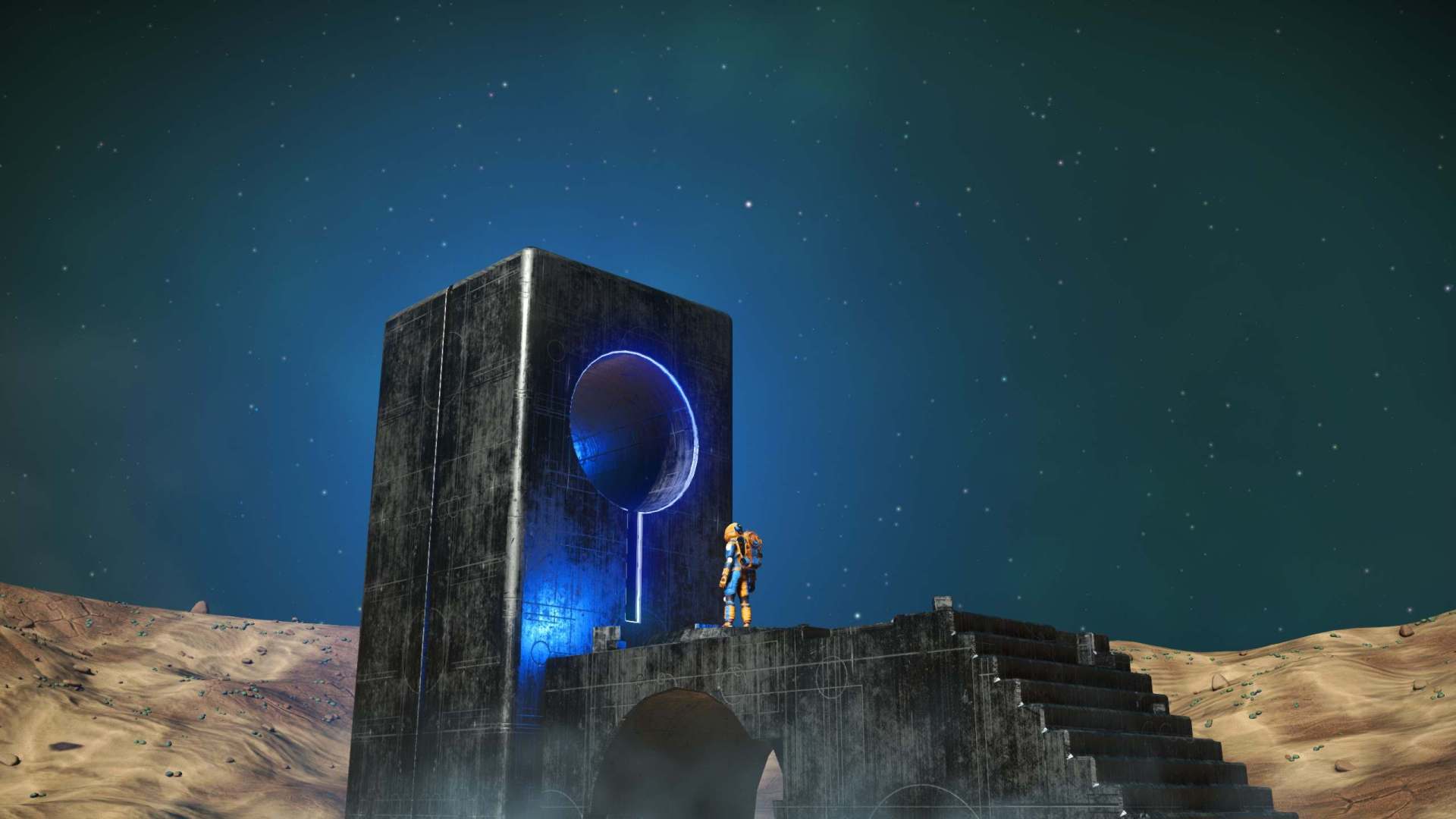
Every so often, a game comes along and revolutionizes the industry. The further back you go, the more these moments had clear points that are easy to label as the defining game to launch an industry-wide change. Take, for instance, the top-down open world fantasy game that revolutionized the RPG genre in the 80s with its real-time combat, experience systems, and mechanics that encouraged the player to explore the world rather than be told what to do. I’m talking, of course, about Hydlide. Not to be confused with that little Nintendo clone The Legend of Zelda.
Often, with innovation, the first instance is not the best iteration. Those who follow have a much easier ability to trim the excess away and refine the core mechanics into something even better. Cars, for example, revolutionized human travel in 1885, but it was not until 1916 when Cadillac introduced the Type 53 that the familiar and easy-to-use layout was introduced into automobiles and became the standard format for cars moving forward. Almost anyone who knows how to drive a car today could manage a Type 53, and while we all have heard of the famous Model T, it requires far more knowledge to operate by comparison.
No Man’s Sky has a strange position in the annals of gaming history. While some titles could certainly be attributed to having similar mechanics and predating the use of procedural generation, nothing is quite like NMS. The scale, for instance, still remains the largest playable game world ever created. But size does not a good game make.

In fact, on its release, NMS was probably the most despised game ever launched. Most of this is attributed to the game’s overhyped marketing interviews done by Sean Murray. While not all of his comments are necessarily lies, the intensity emphasized in the game was certainly exaggerated, specifically with the multiplayer elements. For the most part, this game is a single-player experience with touches of multiplayer scattered and added after release.
As a day one player, I can say the game did not hold up to the hype on release, but I never thought it was bad. Certainly not worth the biblical level of criticism it received. Now, after so many years since release, the reviews have started to change because of the constant updates over that time. For this review, I am going to be focusing on the game in its current state and only use the initial launch as a comparison or reference to what it was.
Gameplay: 1
You can do almost anything in this game. Because of that, no feature feels completely fleshed out except for maybe the scanning and crafting components of the game. When the game starts, you will become familiar with the humanoid-based controls I will refer to as your exosuit mechanics. This is essentially your characters traveling without the help of any vehicle.

There is a lot going on here in terms of mechanics, mainly centered around your multitool, a piece of advanced technology that shoots fun, colorful lasers at all sorts of things. You can mine for resources, dig and terraform, fish, and even use different weapon systems on the enemies you might encounter. These different modes are available through upgrade slots you can attach at your leisure, which is nice.
If you do not like having to cycle through your fishing pole when you want to mine for resources, you simply do not have to install it, or rather, install it on a different multitool and specify all the other upgrades to focus on that type of task. A helpful hint I would offer to new players because the menu for selecting these different modes on the multitool is a major gripe. You have to press a single button to cycle the options, and with how many there are, it seems poorly designed. PC players can switch multitools using the number keys, but this option is not available for console players and should have a better system, like using the D-pad to bring up options quickly, like many other games feature.
In your exosuit, you also have different tools such as the scanning visor, life support systems, personal furnace, and jetpack. Much of the practical exploration in the game is centered around finding more exosuit upgrades to improve your inventory, which takes a long amount of time to fully upgrade. This hits too much of the core of the gameplay I refer to as practical exploration.

The ships and different exo crafts all have missions tied to them to unlock upgrades or purchase basic tools and upgrades from the anomaly. These vehicles help you explore in general. The ships allow you easier travel across star systems and galaxies, while the exocrafts make planetary travel easier. If you do not like open-ended exploration, then you will certainly not like the game.
Much of what you come across in your travels will be tied to upgrades for the vehicles and their subsystems, which in turn make it easier to explore. Hopefully, the gameplay loop is starting to emerge. This practical exploration makes the vast distances crossed more rewarding by making your mining laser extract more resources faster, or increasing your sprint distance and inventory. If you do not find time to take in the scenery or diverge from your marked waypoint, the game is going to get boring quickly.
While the majority of systems do not feel entirely complete, the overall combination of them remains fluid. There are a few moments of clunky gameplay, and the seamless travel from planets to space really exemplifies how the game can be perfectly played without classic load screens. The most common issue comes from switching between these tool settings.
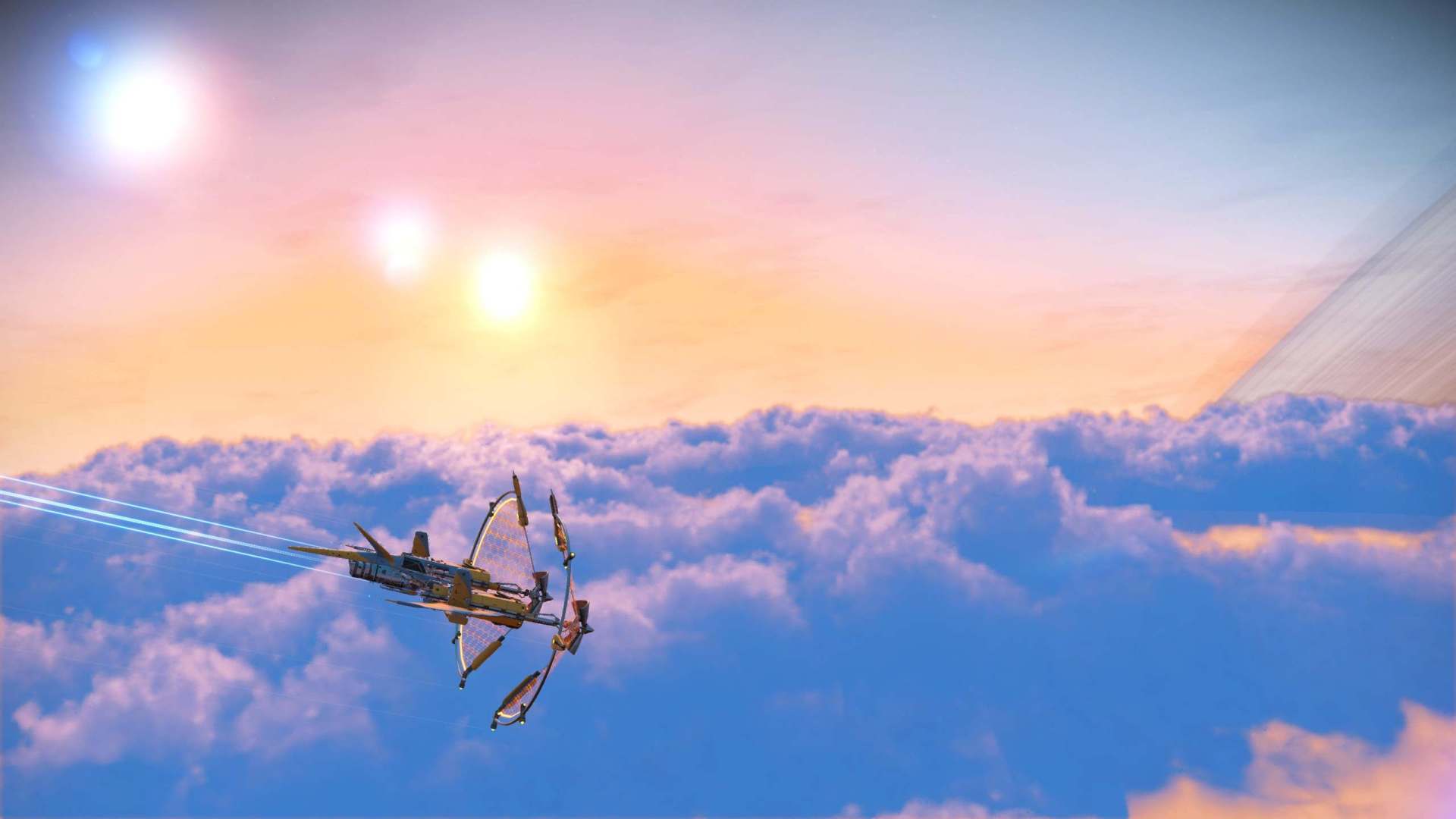
This sense of discovery is what keeps you playing. Seeing the different planets from the cockpit of your starship is enough to keep each warp interesting. After a while, the generation may start to seem familiar. The base number of similarities becomes more apparent as you play. It might feel repetitive after more time, but something unique is always waiting around another orbit.
The space frigates and ships also come with plenty of variation. Thanks to the recent updates, you can even build your own from the parts you accumulate. That alone will give any player hours of content searching for a cooler or more equipped ship. Designing your own ship also made the time spent searching for more practical by being able to scrap them for upgrade modules or parts. Some ships are tied to the ‘multiplayer’ Nexus on board the Anomaly.
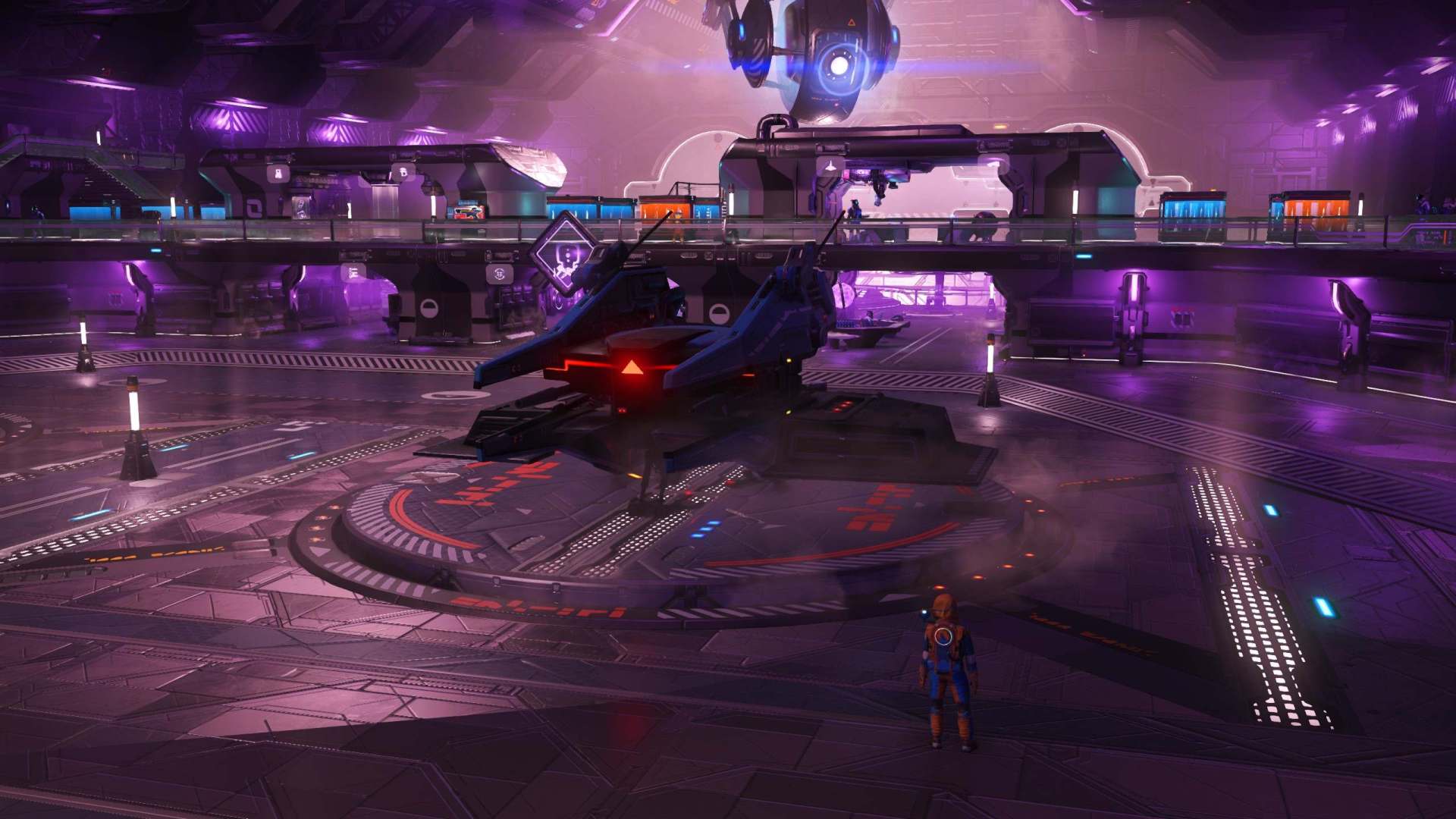
There, you can find missions tied to event rewards and other players. You can always find newer missions, but you will have to wait for specific events to start to get many of the rewards. Rewards that will be time-locked when the event ends, unless you are on PC and willing to alter some game files.
The multiplayer still feels lackluster even after all these years. It still has not reached the degree promised before launch and probably never will. You can host lobbies to let friends join your game near you, which is a major plus, considering how hard it would be to meet up in the galaxy. The missions on the Nexus feel repetitive quickly but usually do not require much time to complete. Take that as a good or bad thing, I would have hoped to have more immersive sessions similar to Sea of Thieves style but that game launched two years after, still the style existed before.
Story: 2
There are two storylines tied to the game that have you using practical exploration for these vehicles and also understanding the lore behind the three different, sometimes four or five, alien races you encounter and the universe as a whole. It feels intentionally vague so that the amount of curiosity can still remain in the player after those missions are completed. Who knows what new information you might find in the next abandoned outpost?

Each will offer hours of gameplay to follow while explaining the complicated systems of the game. They are not incredibly complex, but with so many mechanics in the game, it is certainly helpful and fun to play through. I have probably completed the game three separate times over the various updates. Each offered massive amounts of new content and made the experience more rewarding.
When the story is finished, and you find yourself possibly with more questions than answers, you might find yourself wondering what to do next. That is entirely up to you. There is a massive galaxy to explore and endless missions. This is where the practical ends and intrigue takes over. If you want more than 60 hours of enjoyable gameplay, that’s a prerequisite.

Atmosphere: 2
Given the diversity of everything in the game, it is easy to lose yourself in finding the perfect spaceship, planet for a base, or pet. There are next to countless possibilities, but one thing should be made clear about space games on this scale. Space is mostly empty. A hard-learned lesson hard learned from games like Starfield.
It is not the kind of action-packed excitement you expect from other titles. The best way to describe the game post-story missions is like the most interesting hiking simulator. You are blasted with incredible views and interesting scenery almost nonstop and entirely at your discretion. At any moment, you can spawn your spaceship and fly into the stars to explore the surface of another planet. You have more control in terms of exploration than any other game ever made. The overall feeling is casual. There are certainly intense moments, but the vast majority of the game is surreal landscapes.
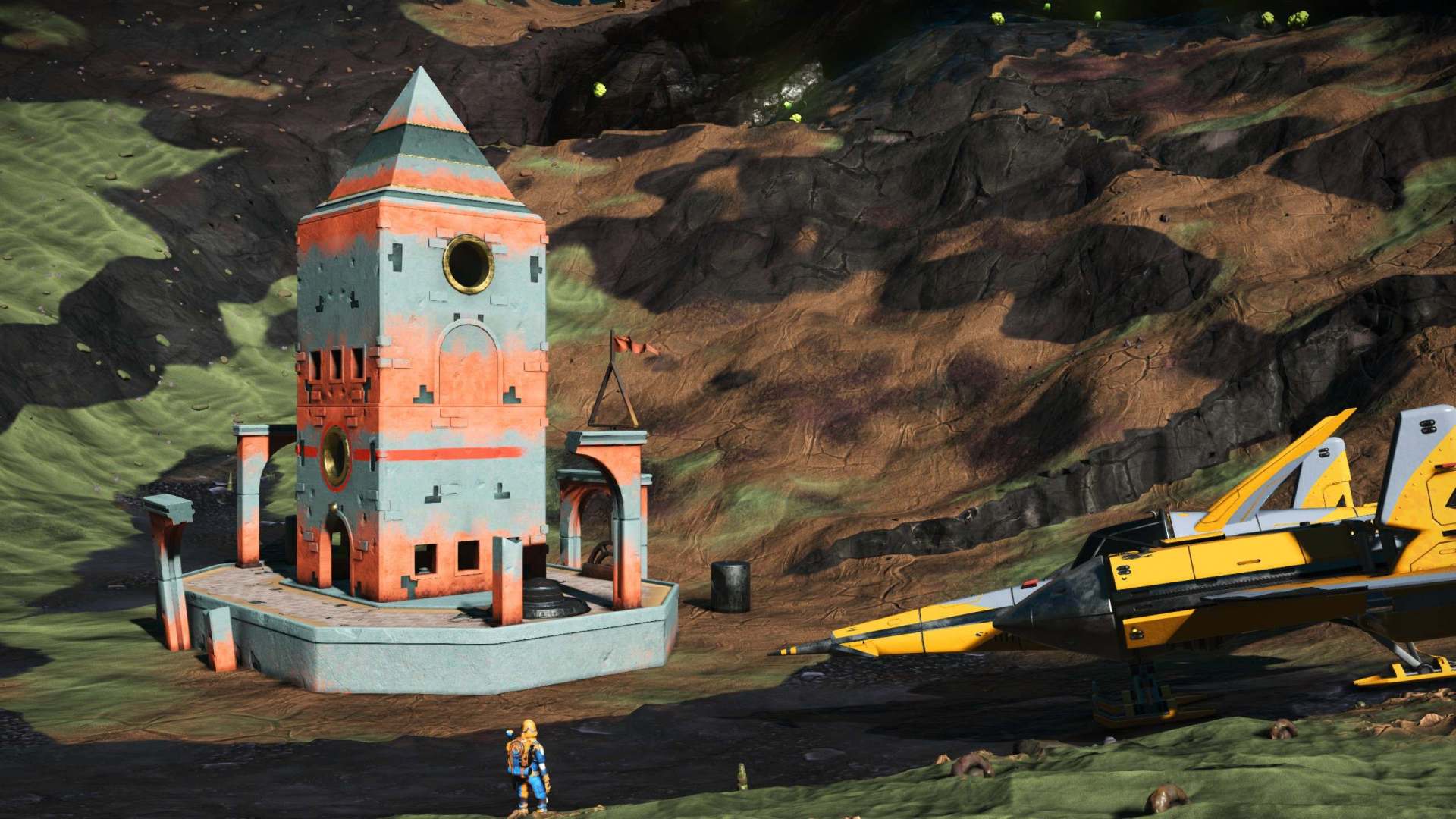
The soundtrack also manages to deliver. It perfectly sets the scenes you discover as you travel across the cosmos. It’s hard to find the seams in transitions from combat and story elements as you come across them. It has an emphasis on being fluid in almost everything you do, aside from crafting. This feature is entirely crucial but lacks rapid systems like inventory searching and any kind of snap feature to rapidly maneuver between items. It gives a sense of trying to cater to the console and VR crowd, but it is a big miss for PC players who usually have integrated systems in games with such massive crafting elements.
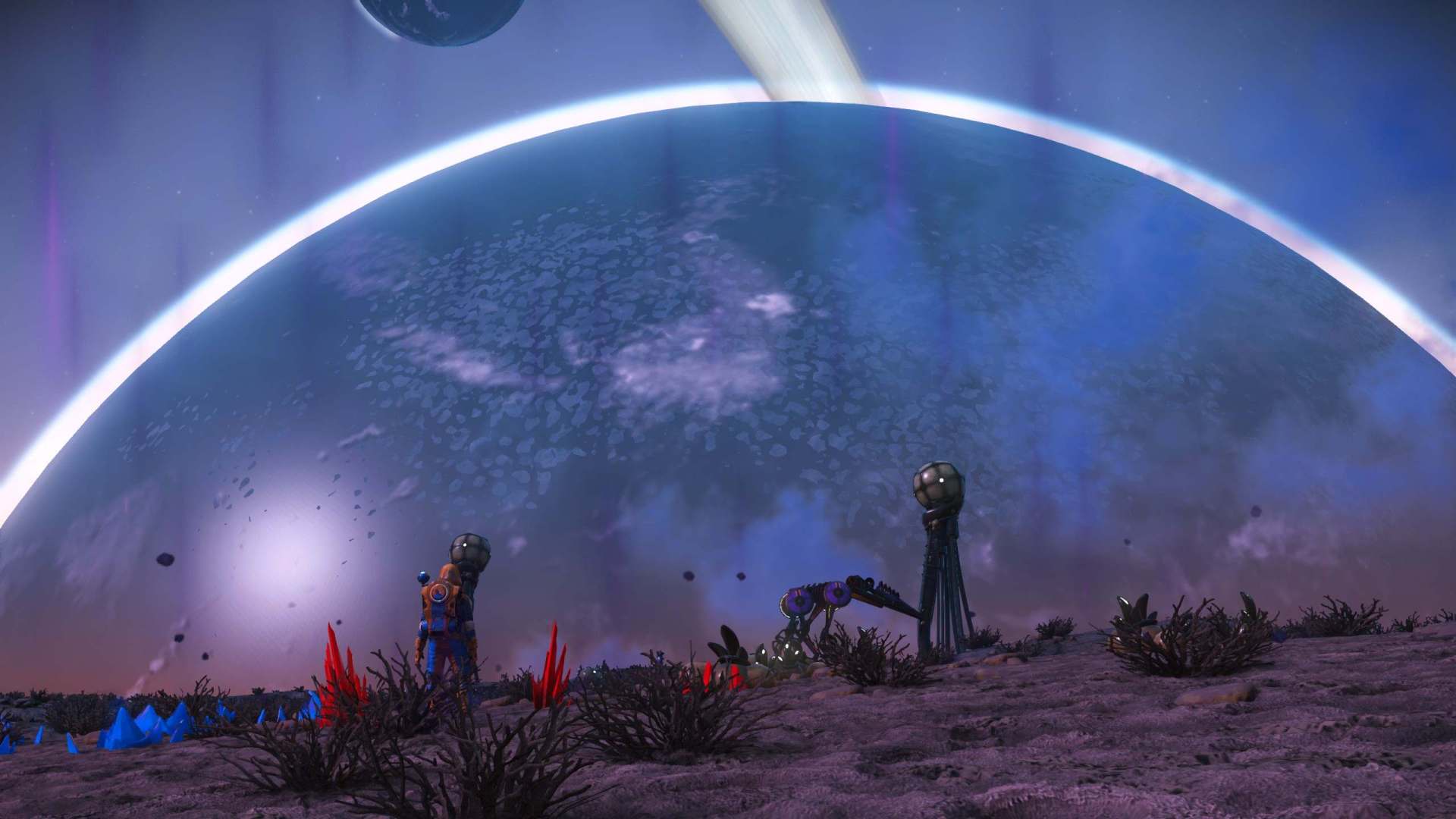
The Atmosphere keeps the game together. Not only is it uniquely designed, but it also manages to exploit the massive scale of the game as a benefit. Something Starfield did not manage to capitalize on.
Value: 2
No Man’s Sky has had consistent updates since its initial launch. It is easy to say the content of the game has more than doubled since its release. As a result, the price since release has hardly shifted. It was unfortunate that the game launched with much less than promised, but the team at Hello Games has certainly put in the work to make the value a fair price. For anyone looking for an exploration game, I would highly recommend the game, even at full price. Search as one might, you are not going to find a game like No Man’s Sky.
Duration: 2
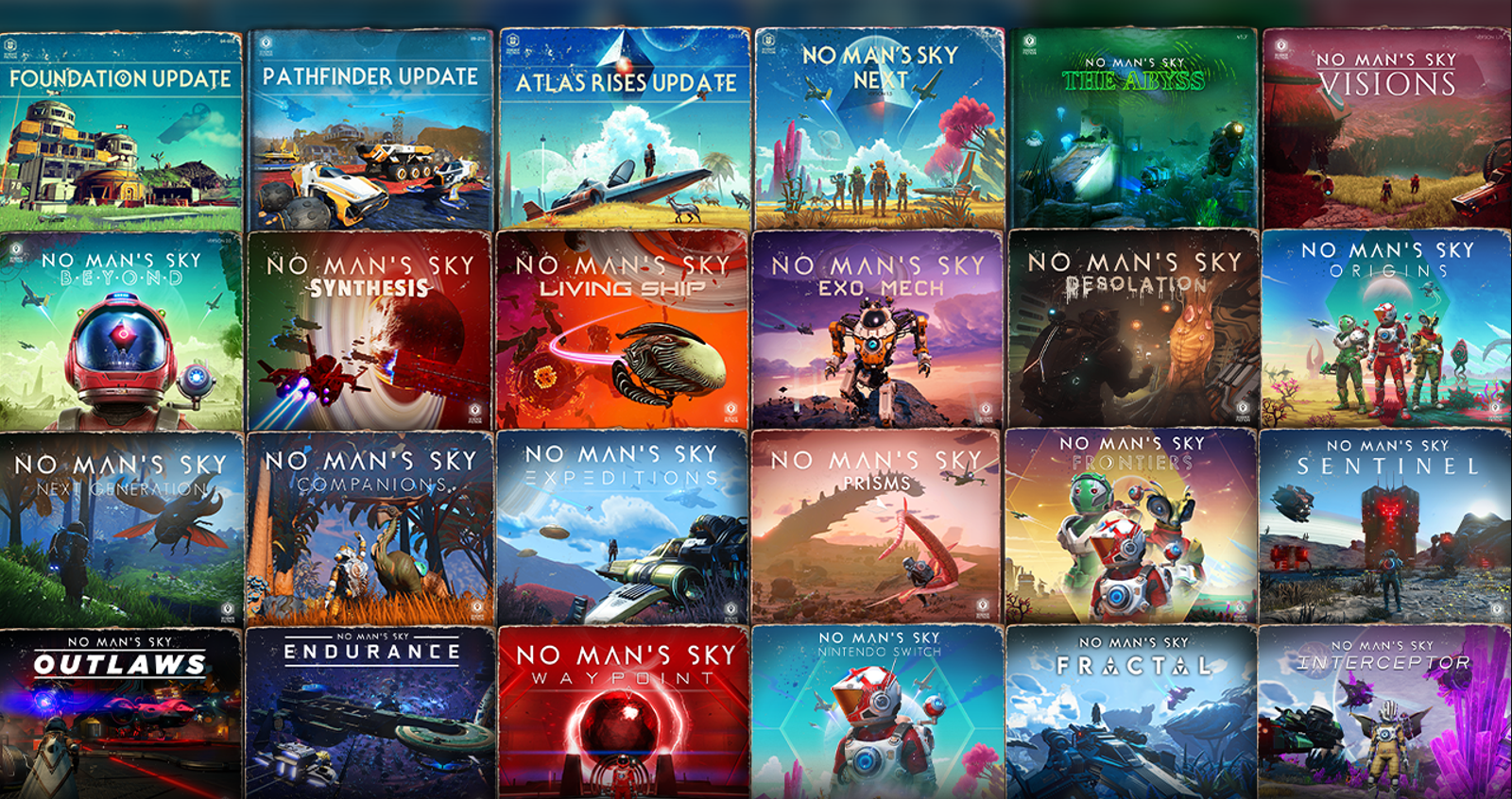
Play the game as little or as much as you want. If you are a veteran of the game, you can skip much of the main story by purchasing upgrades aboard the Anomaly. This will still leave you with the second-story option available, but highlights the freedom the game gives you from the jump.
I would estimate that within 3 hours, a veteran player can play through the opening and have a well-equipped base ready to explore wherever they like. For those less seasoned, you can expect a solid 60 hours to fully explore the core mechanics and vehicles of the game alongside the main story. This natural progression, to do either option, is nothing short of excellent development and admirable, given how the updates have changed the game. Many features have changed over the years, meaning old players from the start who stopped playing can pick up the game again with ease and at their own pace.
Total Score: 9/10
Simply put, it took too long for the game to be made from release to its current state to get a perfect score. While some of the releases have a more planned feeling to them, I think a lot was crisis control for the lackluster launch. The byproduct of this is that the core features around crafting, combat, and mining were never fully completed or rounded out enough to be flawless. The constant additions helped to improve the emptiness of space, but without a massive overhaul to all of these features, it leaves some formatting to be desired.

That would be an incredible undertaking, but certainly not impossible. In recent years, Cyberpunk 2077 underwent a similar overhaul to an already good game that brought it as close to flawless as I think any other game has achieved. All that to say, the Hello Games team set out to make an incredible groundbreaking game, and after all these years, they certainly achieved it. Nothing has yet to come close to the same feel in gameplay, for the better in my opinion, and makes the release of their next game, Light No Fire, all the more exciting. Hopefully, the lessons learned will be applied to this game.
If you still have reservations, be sure to check out our gameplay series on YouTube! You can find extended, relaxing gameplay of No Man’s Sky, where you might find useful tips or just some white noise during the day. Let us know what you think of No Man’s Sky, as well as any content you would like us to cover

By Nash Moorer




 Off the Shelf Media
Leave a comment