

After months of speculation, rumors, and leaks, Nintendo finally announced what we all already knew: the launch of Nintendo Switch 2.
Having capped off 2024 by surpassing the PlayStation 2 as the best selling console in the United States, it was only a matter of time until Nintendo would try to capitalize on the success of the Switch.
In the end, I think it’s going to be a colossal waste of time and money for Nintendo.
A console that ruled the nation
Like most folks in the U.S. in March of 2020, I was hell bent on securing myself a Switch.
Originally launched in 2017, I was well into my college career when the Nintendo Switch first went on the market. During this phase of my life, I had all but said ‘goodbye’ to videogames. My last console was the Xbox 360 and I had no time and no money to devote to videogames (still don’t). In fact, of the few friends I knew that did purchase a Switch, I found the decision to be childish.
However, when the world went into lockdown, I plunged myself deep into all of the pleasures of my childhood to make the time spent in the house pass a little smoother. Once again, I was binging Marvel and Disney movies, taking up pastimes like finishing puzzles and playing sports. Hell, I was even doing arts and crafts on a regular basis.
Whatever free time I had outside of finishing my degree and working remotely part-time, I spent doing the same activities I would have been doing when I was 12. And it was fantastic.
Yet, of all the childhood favorites I was revisiting, there was one piece of nostalgia I could not reach. Animal Crossing.
Since the first Animal Crossing (US) game was released on the GameCube in 2002, I’ve been playing this game. In fact, I’ve played all but one iteration of the game: the Nintendo 3DS version, Animal Crossing: New Leaf. I even played the mobile game for a bit, Animal Crossing: Pocket Camp. I’ve played Animal Crossing as much as my fellow writer, Will Tarashuk, has played Kingdom Hearts. You can find his ranking of the Kingdom Hearts franchise to see what I mean.
In the midst of a global pandemic, when Nintendo announced the release of Animal Crossing: New Horizons, I knew I could not stop until I had a Switch for myself to play it. And it was not an easy task.
And play it I did. To this day, I have more hours logged on Animal Crossing: New Horizons then I do on my most played PC game. (It’s Stardew Valley, in case you were wondering.)
The Nintendo Switch reignited my love for videogames at a time where I needed it most. In fact, of all the consoles I’ve played, my love for Nintendo consoles has proven to always supercede the others. To exemplify my point, I rung in 2025 by playing Just Dance games on an original Wii.
Nintendo is a timeless, classic company and I will almost always be willing to support them.
Yet, despite my love for Nintendo, I will not be wasting my money on a Switch 2. In the long-run, I think this console will prove to be a major mistake for Nintendo. Let’s get into it.
An utter lack of innovation
When I look back on what I love about Nintendo consoles, it comes down to one word: innovation.
My first console that was truly my own was my GameCube. Then, I had the Game Boy Advance SP, the Nintendo DS and Nintendo DSi, and finally, the Wii. Today, I still own all of these devices, and they still all work wonderfully.
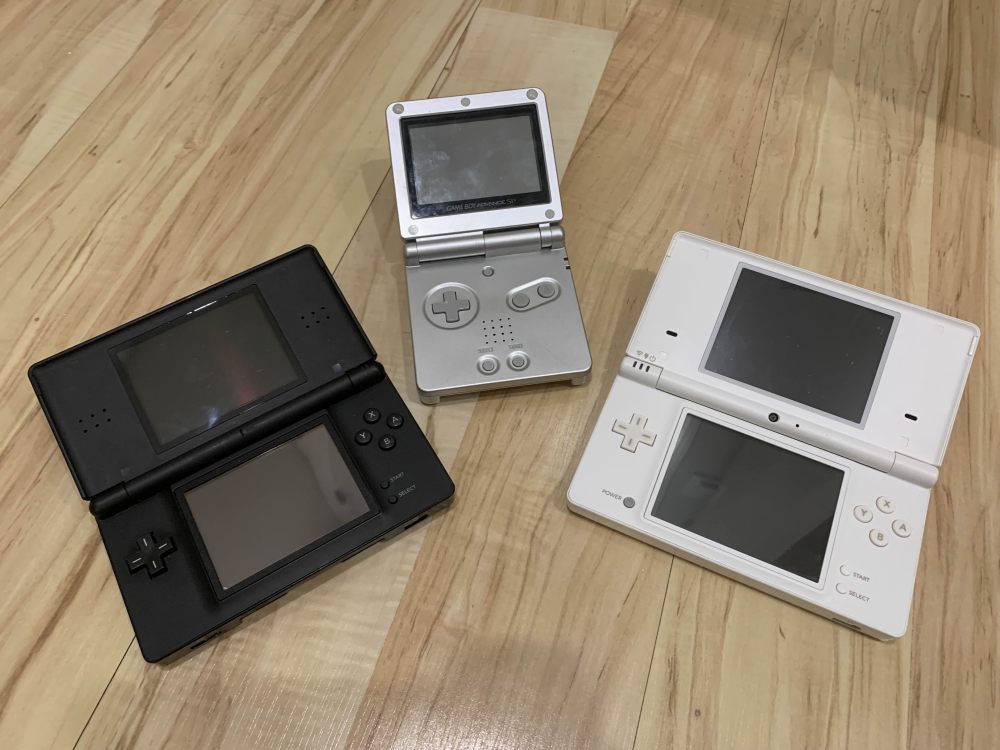
Each of these devices was worth owning because it brought something new and grand to the table.
Going from the GameCube to the Game Boy provided the chance to play handheld while the DS allowed for a new way to interact directly with the game thanks to the stylis and touch screen. Finally, with the Wii, we had another entirely new way of playing games via the remote and nunchuck combination.
If you look at my list of 10/10 games, most of them are videogames made by Nintendo during this era of gaming.
In every version (except arguably the DSi), the device lended itself to play games in a way that was unique and engaging. For the few consoles I did not own, such as the Nintendo 3DS and Nintendo Wii U, it was because I felt that they simply wouldn’t offer enough of a reason to drop my perfectly good system for something that would maybe be a slight improvement.
Nintendo’s overall approach to building truly brand-new consoles allowed for them to regularly stand apart from competitors like Xbox and PlayStation that were primarily making new consoles that allowed for better graphics or overall gameplay, not experience.
Of course, developers at Xbox and PlayStation were trying to compete and be innovative as well. Yet, Xbox’s Kinect and PlayStation’s even earlier EyeToy, though aiming to achieve the same objectives as Nintendo, found much less success. Eventually, Microsoft even needed to write off its flagship Kinect game, Kinect Sports Rivals, due to underperformance.
The only viable competitor to the handheld Nintendo devices is the PlayStation Portable, or as it is more lovingly known, the PSP.
Like its most successful predecessors, the Switch once again accomplished what Nintendo does best: it changed how you were able to play the game.
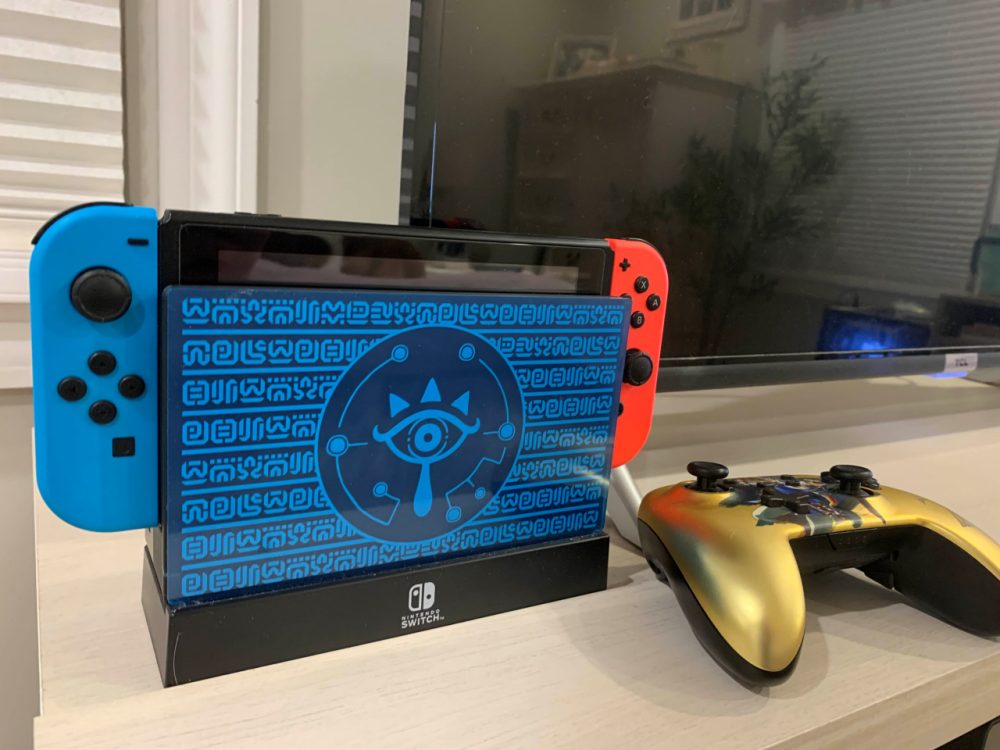
It offered the best of its consoles and the best of its handhelds by morphing them together. While the graphics or high-level performance were never something to write home about, it gave gamers a device to play on the go or on the big screen. A perfect marriage.
Too much market competition
A majority of the console lovers, or at least the ones I know, are dedicated to either Xbox or PlayStation. Convincing those players to switch consoles is almost impossible. Those that don’t fall into either of those categories are most likely PC gamers. Again, getting a PC gamer to switch to PlayStation or PlayStation to Xbox is harder than pulling teeth.
Despite the sustained popularity of Xbox and PlayStation, the true competition against the Nintendo Switch and any updated iterations of it come from the Steam Deck.
Unlike classic consoles, which must remain in one place, the Steam Deck takes away the Switch’s most unique feature: the ability to go mobile.
Not only can the Steam Deck be docked to a screen and be played on the go like the Switch, it can also perform at a much higher level. And for a comparable cost.
The most cost-effective Steam Deck is priced at $399.00 while the Switch is currently offered at $299.00 and the Switch OLED is priced at $349.99.
Gamers can play a greater variety of games with a better performance for a slightly higher cost. In short, anyone not devoted to Nintendo’s intellectual property is likely better off purchasing a Steam Deck.
While series such as Mario Brothers, Legend of Zelda, Pokémon, and even Animal Crossing are great, I’m not sure it will prove to be enough in the long-run for gamers to remain loyal to Nintendo.
Seemingly lacking in updates
The real reason I believe the Nintendo Switch 2 will fail: it isn’t offering enough of a difference from its predecessors.
When rumors first began to spread online about the possibility of a new Nintendo console modeled after the Switch, I thought: don’t we already have this?
The Switch OLED offered players an improved system for handheld gaming, including a larger screen, better audio, etc. Yet, I don’t know a single person that bought it. Why? Because everyone who wanted a Switch already had one and a few slight updates wasn’t a good enough reason to buy another one.
Though some details have been left a secret, here’s what we do know about the Switch 2 so far:
- Improved performance: While the exact specs have yet to be released, the device promises improved performance, though it will likely still underperform when compared to the PlayStation 5.
- A larger screen: Much like the OLED, the Swith 2 is set to offer a larger screen for improved handheld play.
- A sleeker design: The Switch 2 does offer a much improved visual appeal, but pure aesthetic under my TV was never a priority.
- Most games will be backwards compatible. Most, but not all, games are expected to be backwards compatible and will not need to be purchased another time to play. No need to buy Skyrim again (or again and again)!!
- Snap in place joycons: Where the current joycons slide into place, the updated version appears to snap into its spot with magnets.
All in all, none of the above really excites me. Though my Switch isn’t fancy, it plays games that I enjoy at a reasonable rate to enjoy it. Sure, I can’t run Risk of Rain 2 at optimal capacity, but in my opinion, that wasn’t what the Switch was made for. It runs games like Legend of Zelda: Breath of the Wild and Overcooked! 2 perfectly. I don’t need it to do much else.
Much like the 3DS and Wii U felt like a waste, so does the Switch 2.
Best of luck, Nintendo
I don’t often like to make bold, line-in-the-sand predictions as it feels arrogant to do so. Yet, I can’t help but voice my disappointment in Nintendo for failing to take another big leap with its newest console. Sure, I can understand the ‘if it ain’t broke, don’t fix it’ mindset, but that seems far and away from what makes Nintendo, well, Nintendo.
If I’m wrong, I’ll be the first to admit it. If I’m right, my disappointment will be the same. Am I missing part of the appeal? If so, leave me your thoughts in the comments.



 Off the Shelf Media
Leave a reply to Breath of the Mild: The Legend of Zelda: Breath of the Wild Review – Off the Shelf Media Cancel reply