
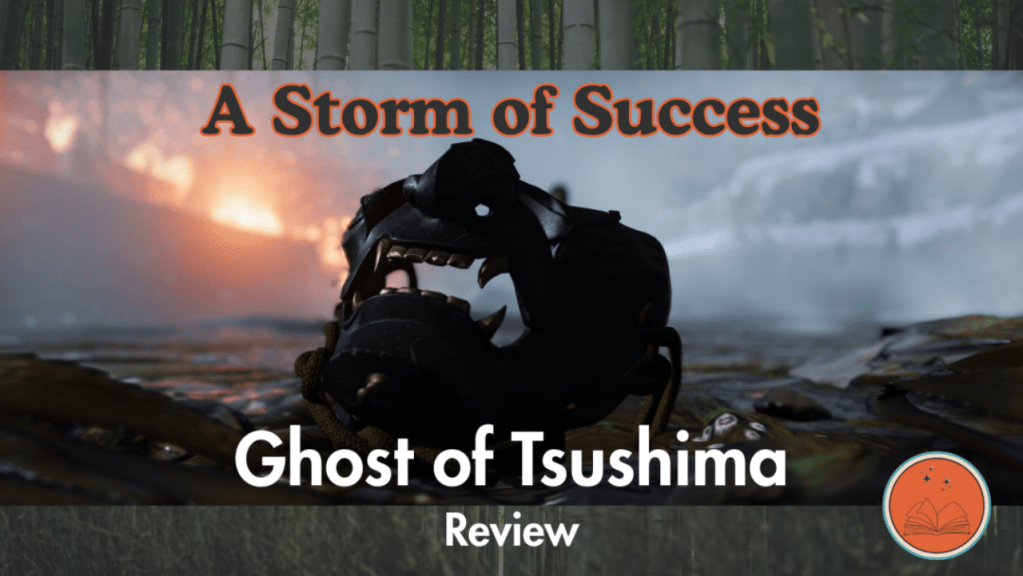
Genre: Action, Adventure
Developer: Sucker Punch Productions, Nixxes Software
Publisher: PlayStation Publishing LLC
Release Date: July 17, 2020
Players: Single-Player
Review Date: April 24, 2025
Format: PC, PlayStation 4, PlayStation 5
Playtime: 62 hours
MSRP: $59.99
Lock in and get ready for a lot of praise, none of which is without proper merit. If this game could be boiled down into a single word, it would be fluid. It manages to establish intrigue and maintain suspense in almost every single aspect a video game can deliver.
Ghost of Tsushima feels original and also familiar, like the first spring shower after winter, which I am sure many of us here in the States can relate to with the recent change in weather. So let’s look at what makes this game so good and an honest, fresh breath the industry needed.
Gameplay: 2
It should come as no surprise that the combat mechanics are at the heart of what makes this game fluid. The general concept behind the heavy and light attack scheme that teases a mastery of the block/perry feature is not entirely unique. Nowadays, often referred to as ‘soulslike’ controls. It’s just the newest rehash of what was the classic ‘button mash’ style. I will admit, it has come a long way but Ghost of Tsushima finds a unique way to perfect the system. The timing for perrys and light vs strong attacks is easy to use but remains hard to master with the changing enemy variants as you progress. You are going to get hit a few times whenever an enemy appears with a new weapon or color armor, but with practice, they will fall like all the rest before them.
You can also decide to call upon your honorable side and force a “standoff” when approaching a new group of enemies. This incredibly cinematic and tense scenario quickly became one of my favorite features and a rewarding go-to when I got the timing down.
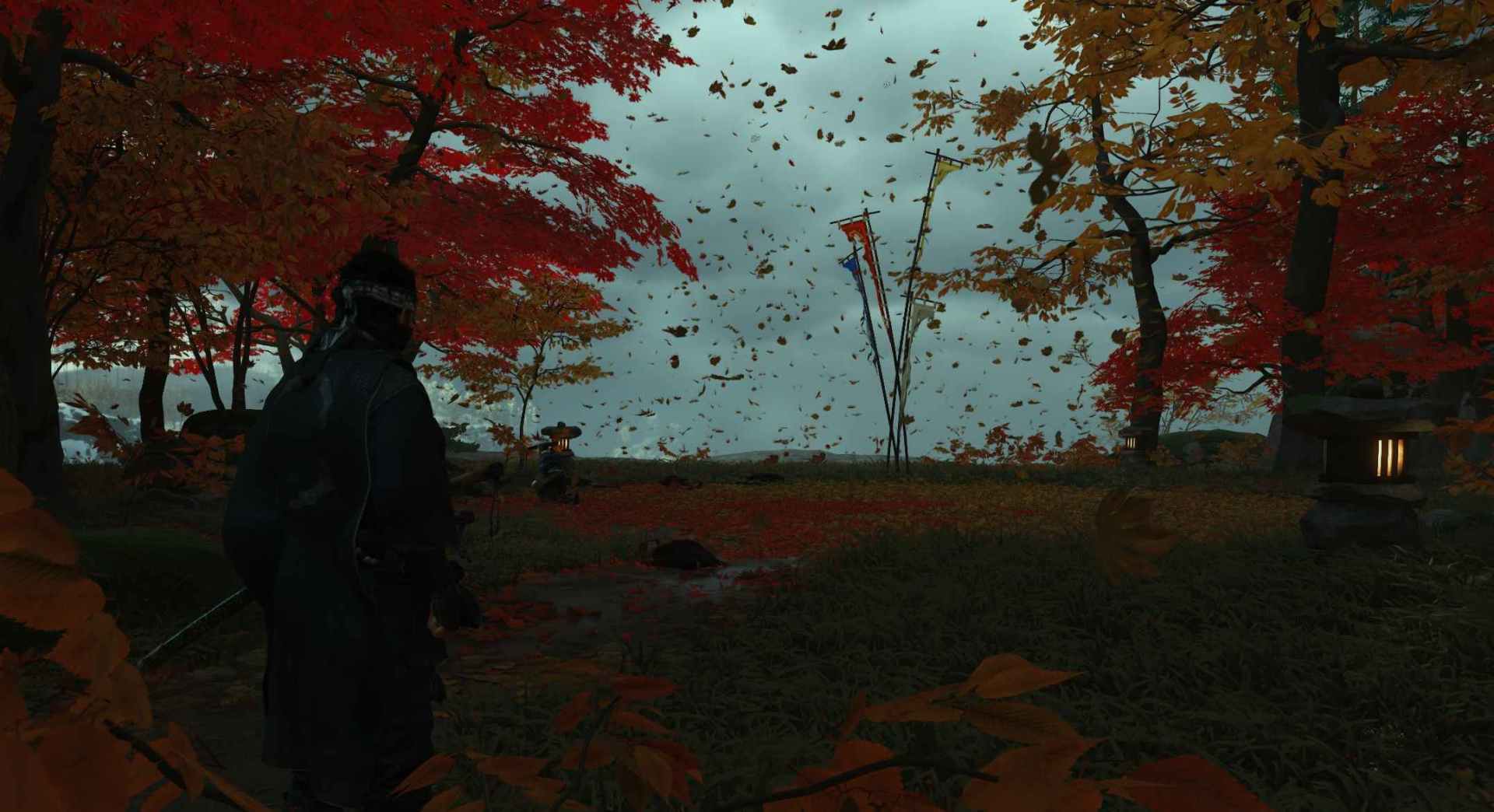
Timing goes a long way in this game across gameplay. While I might find the patience to play on “Lethal” mode, which makes most encounters decided by a single blow for both enemies and yourself, it is also well paced with level progression. This allows you to unlock new weapons and abilities.
Many are locked behind specific missions that make seeking out side quests well worth it. This pacing encourages the player to explore more and rewards them appropriately as the map never feels too far from something discoverable, such as the bamboo minigame, fox shrines, pillars of honor, and hot springs, none of which have enemies dedicated to them but offer unique bonuses to the player that seeks them out.
The short distances are long enough to showcase the map, which also does not become monotonous easter egg hunts. Notice how I did not mention the “Sashimo Banners” in that list because those are the only collectibles that feel annoying to hunt after. No one needs to find 80 of anything in a video game.

This grind to better your character, Jin Sakai, feels well rewarded when you engage in any of the many Duels. These boss fights pit you against a single opponent in a high-stakes fight to the death. The shift in camera angle and degrees of damage exchanged make each one feel pinnacle and worth the effort.
You can also use stealth to help dwindle the enemy numbers from the shadows. It feels like a more heightened Assassin’s Creed where going unnoticed is more difficult but not impossible. It seems to push you towards open combat, and while the stealth is definitely a plus for the gameplay, the satisfaction of open combat feels better overall, in my opinion.
Story: 1
The contrast between stealth and ‘honorable’ combat is the core of the story. As the massive mogul army invades your island and subsequently wipes out almost all remaining samurai, Jin is left with tough choices that go against his samurai upbringing. The failure to save his father as a child weighs on his memory and makes for an organic reason to look to new tactics for fighting the entire invading army alone. From the beginning, the main villain, Khotun Khan, demonstrates an understanding of the Japanese way of life and tactics. Using this knowledge and superior numbers, you watch as your fellow Samurai are decimated in the opening sequence.

Left for dead on the beach, you meet your first ally, Masako, who begins to teach you her abilities as a thief. You adopt tactics you will retain throughout the game and drive the moral divide between your uncle, Lord Shimura. It is completely organic as you progress and are confronted with the choices you have made to embrace dishonorable means to dispatch enemies that outnumber you and your forces. What personally feels out of place with the story is the almost complete lack of control you have that effect the story.
It feels almost like a requirement now to give players multiple storylines based on their decisions, but Ghost of Tsushima is entirely linear in story. This ties into the developing studio, Sucker Punch, and their desire to strain from their previous style of storytelling by not offering binary moral choices. This is one of the few, if not the only time, a developer missed the mark by not offering it. Too often, games seem to jam a morality system in that feels half-hearted and pointless or not conforming enough to the standard it set, like BIOMUTANT, or occasionally in Fallout when stealing from bandits is marked as wrong.
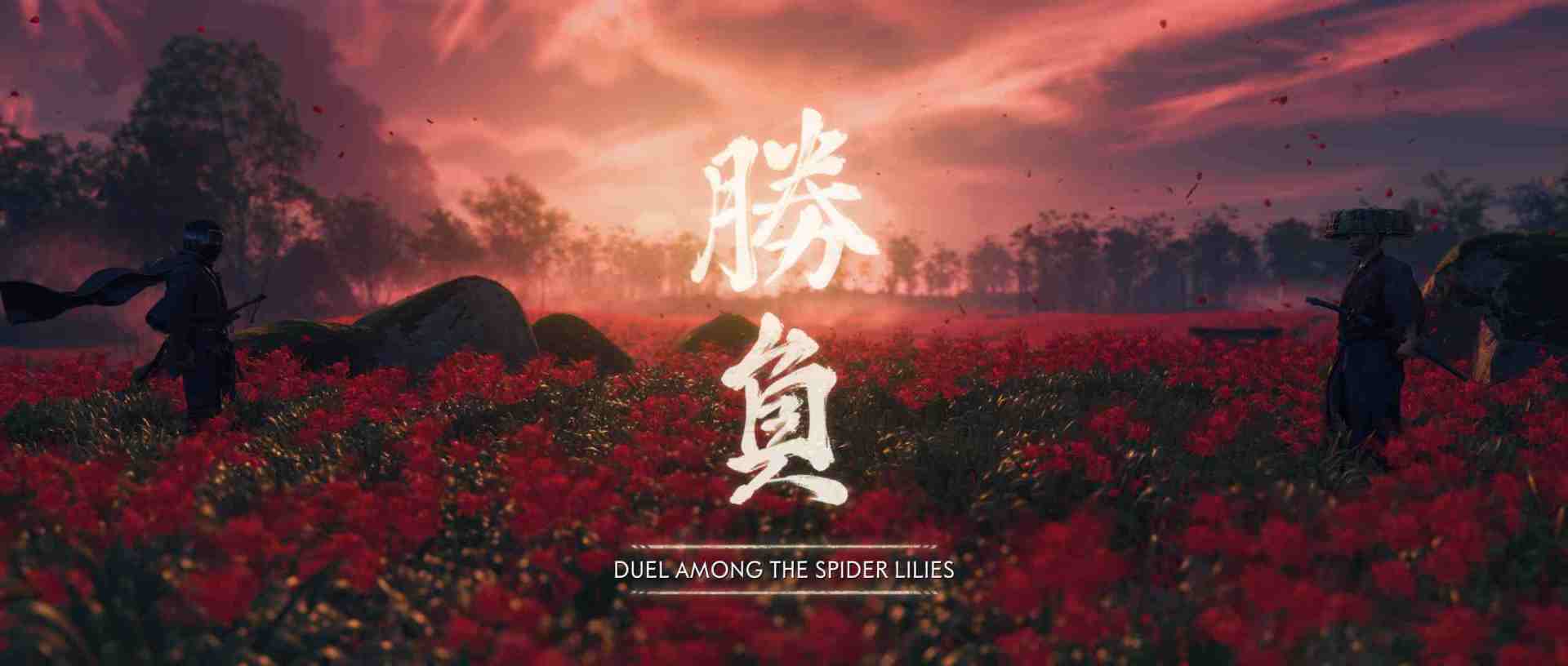
They could have had an entirely unique system based on bushido code rather than traditional Western moral practices. It would have been unique and welcomed and made an already incredible story more of its own, and not just change the weather. The backdrop of the story is the real Mongol invasion in 1274 that saw the entire fleet wiped out by a storm. The symbolism places Jin as the storm that wiped them out, and is the end of the historical accuracy, so why not use player interaction to explore the morality more? The story at large is incredible and genuinely pulls the player in by using Haikus to break up moments of combat and offering one of the greatest storytelling moments I have ever experienced in-game, as referenced in the photo below.

It feels like a completely missed opportunity to not use the skills they had in previous games to showcase morality in a way no other game has come close to. I would pay full price for a membership for an HBO or Amazon series on the game, but the missed opportunity in the videogame medium costs them.
Atmosphere: 2
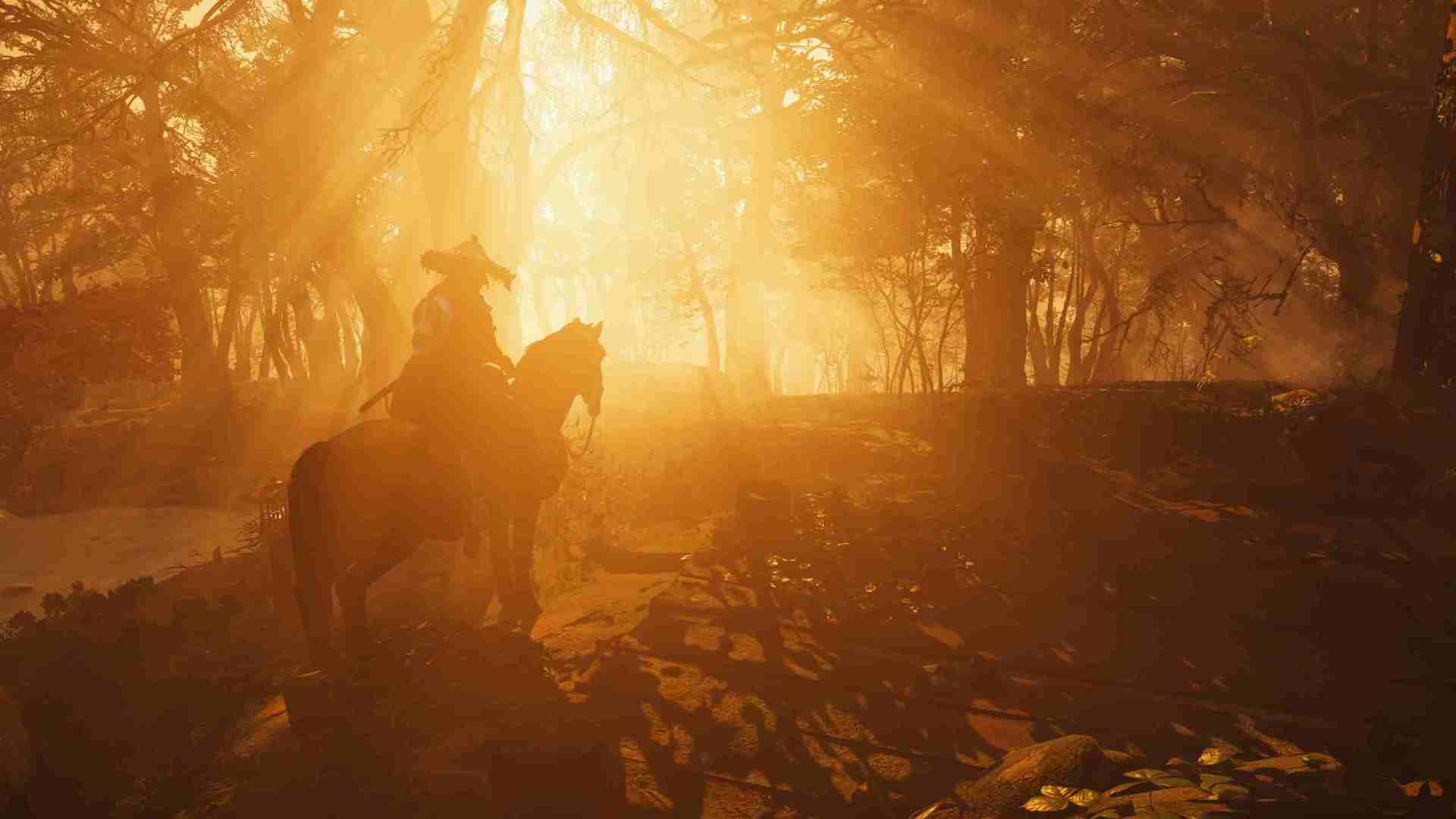
Every aspect of the game ties into the atmosphere and which is why separating them into our normal categories has been a difficult task. Typically, mechanics like navigation and the HUD would fall under gameplay, but the minimalism in crafting the picture the player sees plays a more important role in aesthetics. That is by no means a negative comment, quite the opposite, the almost entirely lacking HUD makes traversing the map cinematic every single time. Only in combat, when switching stances and occasionally when veering off or close to your target location, will any information be displayed on the screen while you play.
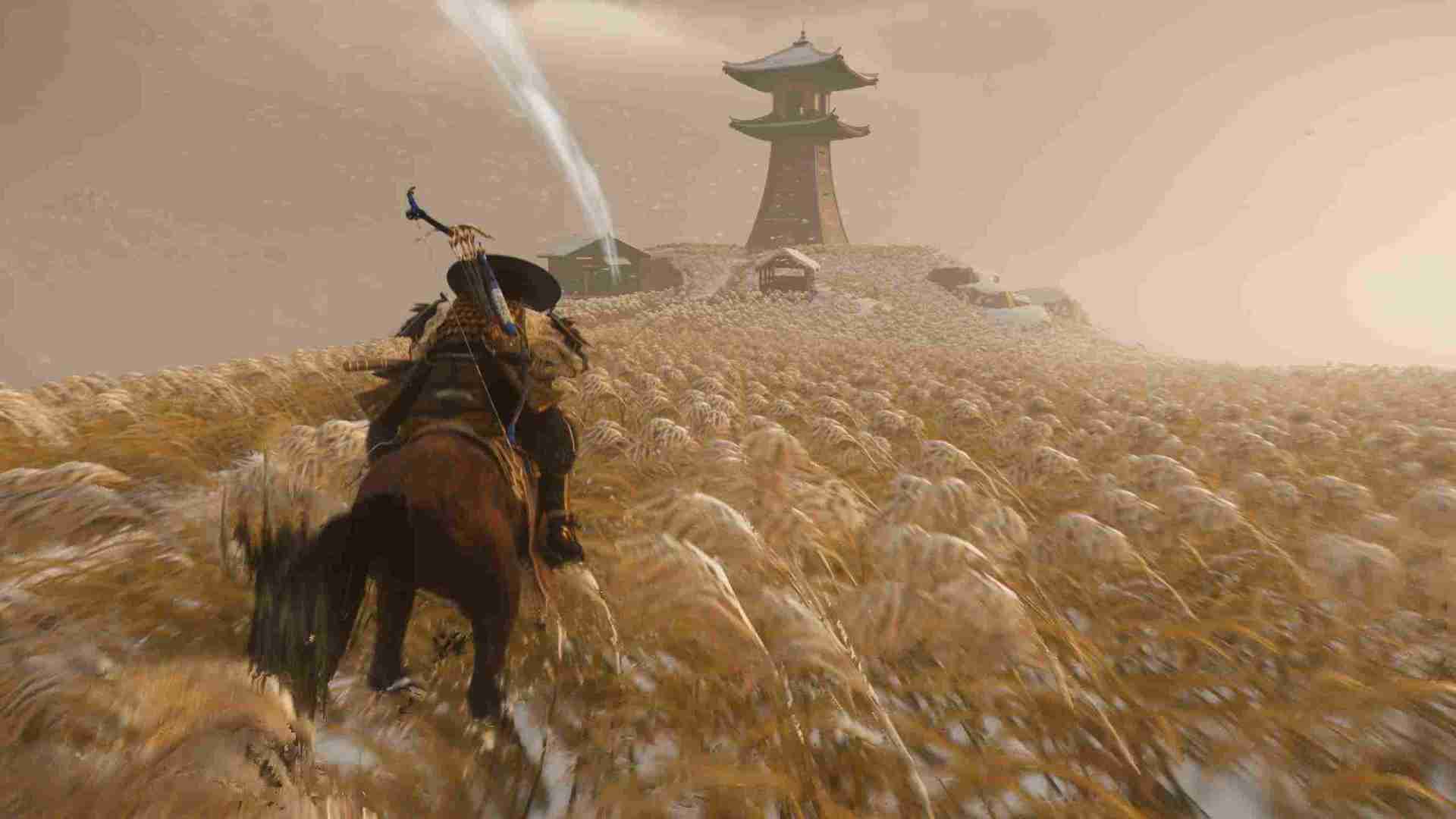
The navigation is also refreshing by using the environmental gusts of wind to point you towards your desired location on the map. They take it even a step further by taking your horse out of sprint speed when you look at the map while traveling, encouraging you to follow the elements rather than constantly clicking into a menu. You can also change the weather rather quickly using your flute, which might not seem immersive but feels more so by using an in-game tool than simply clicking an ‘apply’ button from settings.
The game is a screenshot dream and is the quickest way to fill your PC with potential wallpapers. While I wish I could avoid the surprising amount of times you see buttcheeks in the game, the moments of stillness within the game throw you back into the calm collected mindset a Samurai was trained to maintain.
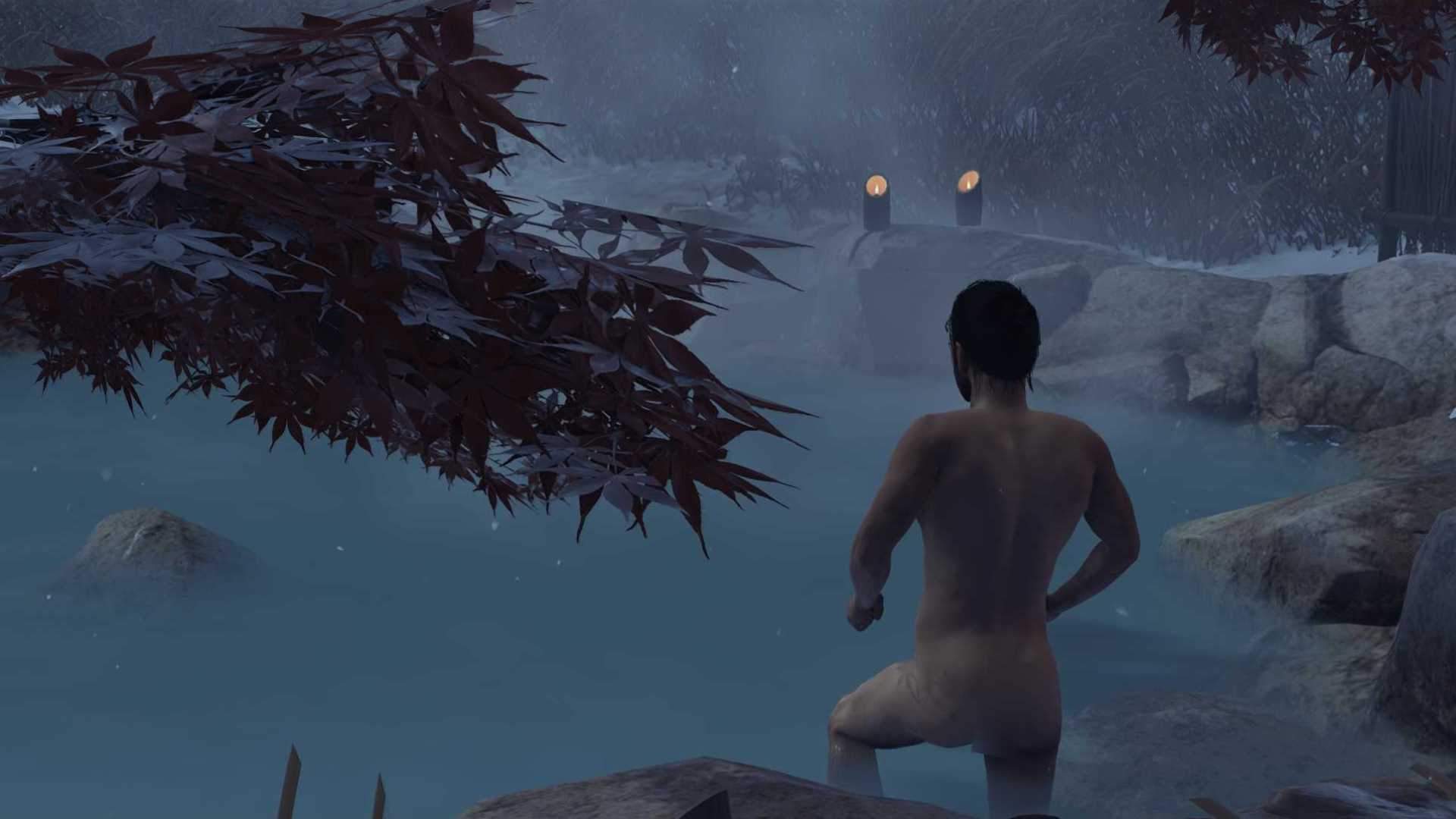
Especially when you get a small health boost every hot spring you enter for the first time. Health boosts that will be welcomed when you enter many of the challenging Duels that really channel some Seven Samurai energy, which is no wonder why the game has a black and white mode named after the famed Japanese filmmaker Akira Kurosawa.
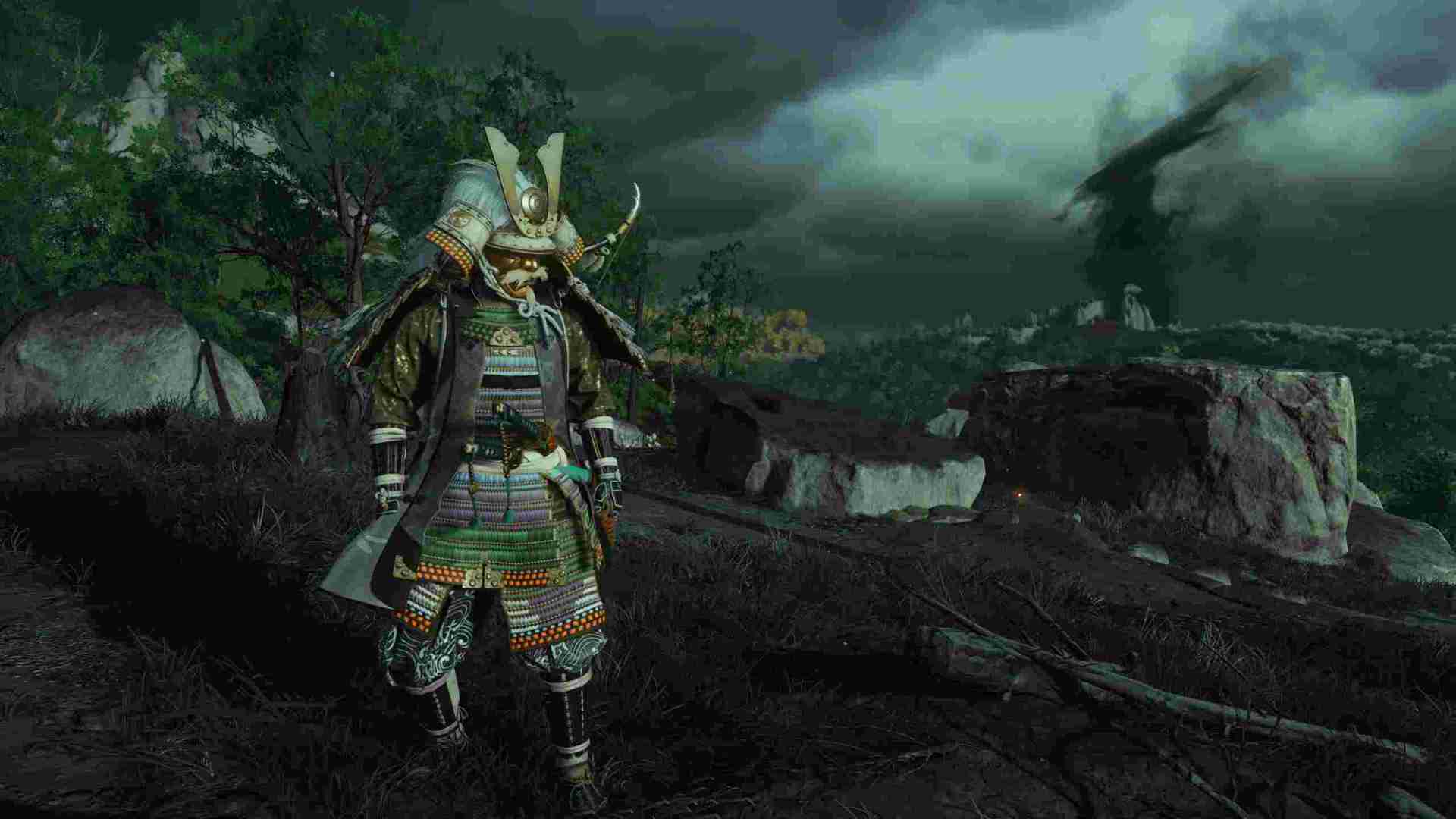
The only complaint I would have is with the armor visuals. They certainly offer a good amount of color variants for each set, but require you to wear a set to receive the stat bonuses. Rather than allow for reskinning to switch up your style, you will find yourself forced to see the armor for the related bonuses. It is a slight complaint, but I am sure I am not alone in finding myself wearing only two or three armors for most of the game because their stats far exceed those of the others. It would have been nice to run around in any clothing I had collected without impacting performance.
Value: 2
All of these factor into the price of the game. Rarely will you find this title on sale, and even five years after release, you are more than likely going to see it listed at full price. It is one of the few titles that deserves it. You will not find a wasted dollar in completing the main story, which took me 62 hours to complete, along with almost all of the side quests.
It also offers a rewarding post-game mode where you can use your full upgrades and armory to replay any mission or outpost. It also boasts a mythical-themed DLC and multiplayer mode, which I have not explored but have been assured is also worth it and even changes some game mechanics to offer a fresh experience. It is the game that keeps on giving and will remain downloaded on my PC for some time, even though I recently beat the main story.
Duration: 2
It is a long game. I am sure there are speedruns out there that use glitches to progress the main story, but I would estimate it to take about 30 hours for someone to complete the game for their first playthrough and focusing on nothing but the main story. Not really sure why someone would want to, with how engaging the entire game is, but to each their own.
Combined with the DLC and co-op features, the game offers more than its pricetag. Certainly not designed for those who want a quick and casual playthrough, with the harder difficulty offering a more rewarding playthrough without feeling unfairly targeted, especially with the options given to the player in terms of tactics.
Total Score: 9/10
Ghost of Tsushima seamlessly blends mechanics and visuals to create something nothing short of a masterpiece. While the story is unique and compelling, it leaves something missing in comparison to other RPGs offering moral choices. It avoids the common hazards but at the cost of not having a system in place at all, which has come to be known as one of Sucker Punch’s strong suits.
The minimalistic HUD visually vaults the game ahead of the ever-crowded screen in modern games and while I deeply appreciate it, the feature only works because of the master class culmination developed by Sucker Punch in this game. It offers unparalleled depth in story and form in gameplay, making it an instant classic, and hopefully, the industry at large can learn the lesson from total submerssion in creating not just a game but adding a worthy title to this genre of art.
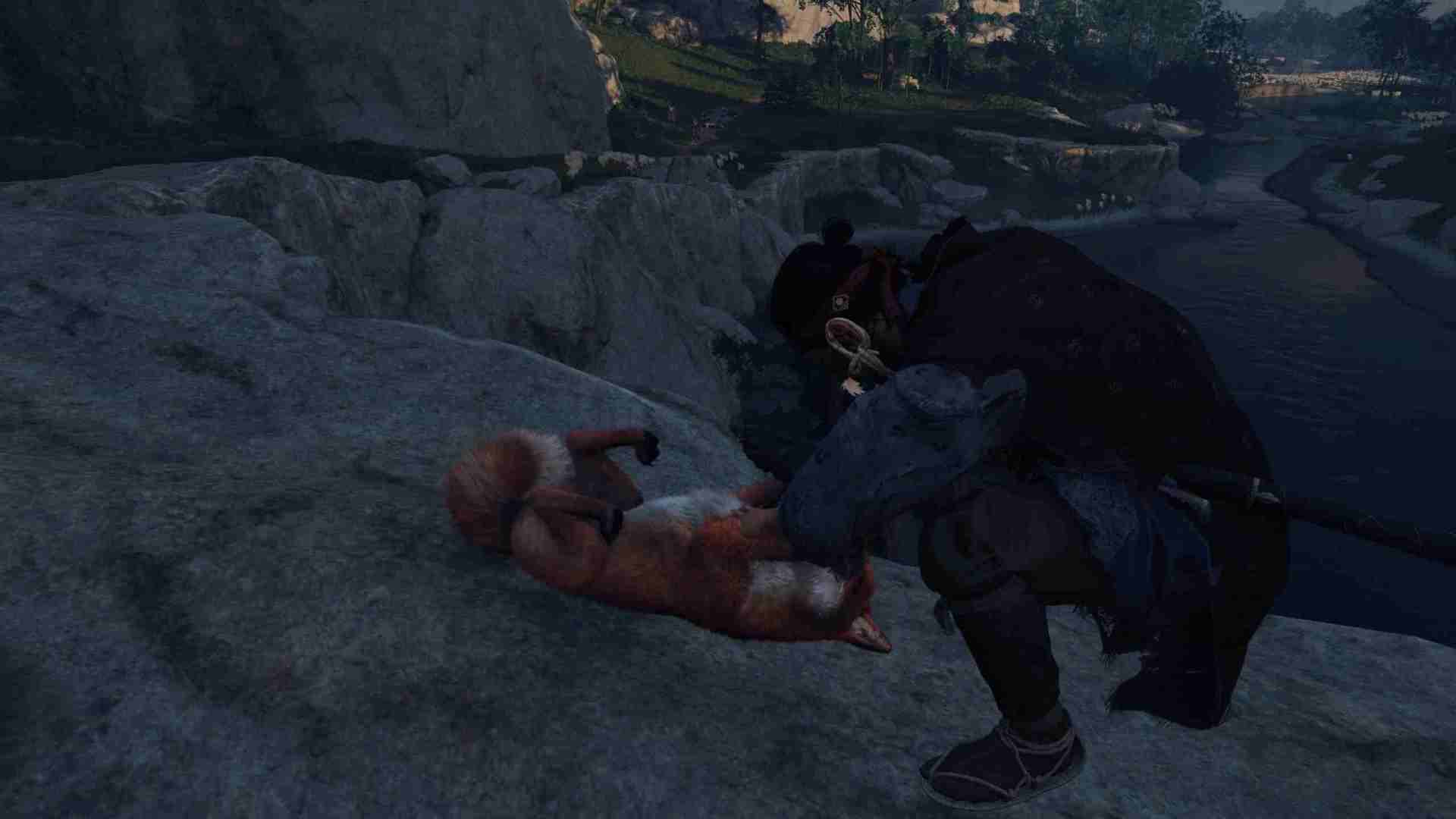
Oh, and lest I forget the crowning jewel of the gameplay: you can pet the foxes.

By Nash Moorer

 Off the Shelf Media
Leave a reply to Setting the Scene: A Conversation with The Scenic Gamer – Off the Shelf Media Cancel reply