

Genre: Survival horror
Developer: Rose Engine
Publisher: Humble Games
Players: Single-Player
Release: October 27, 2022
Review Date: May 19, 2025
Format: Windows, Nintendo Switch, PS4/PS5, Xbox One/Series S
Playtime (To Date): ~20 hours
MSRP (To Date): $19.99

The indie horror scene, though niche in many ways, is one that is quite popular in the videogame space today. Franchises like Resident Evil, Silent Hill and Fatal Frame have inspired an entire legion of upstart developers to try their hand at crafting the next great interactive horror experience. Many of these new games wear their inspiration on their sleeve, which is enough for many fans of these popular series to dive right in.
Every now and then, a game comes along that scratches that classic survival horror itch whilst giving the player a captivating narrative, intense gameplay, and an atmosphere rife with fear and dread. Signalis is one such game.
If you read my bio on Off the Shelf’s ‘About’ page, you’ll see that this is one of my favorite games of all time. Despite my love for this game, I will ensure you still read an unbiased, down-to-brass-tacks review.
Developed by a two-person team from German studio Rose Engine, Signalis is a survival horror experience that blends familiar gameplay elements and tropes with an engrossing narrative. But does it hold a candle to the juggernauts of the genre? Let’s find out.
Gameplay: 1
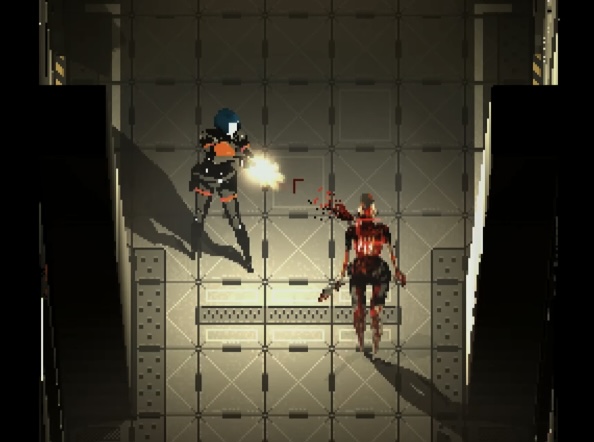
The inspiration of Signalis becomes clear immediately upon starting a new game. The camera angles are fixed and the graphics are that of the iconic 5th console generation, polygonal style. Elster doesn’t exactly control like a tank, but there’s no combat dodge.
Enemies lurk throughout abandoned and derelict sci-fi set pieces such as space colonies, interplanetary mining facilities, spaceships and even places beyond what we can comprehend in reality.
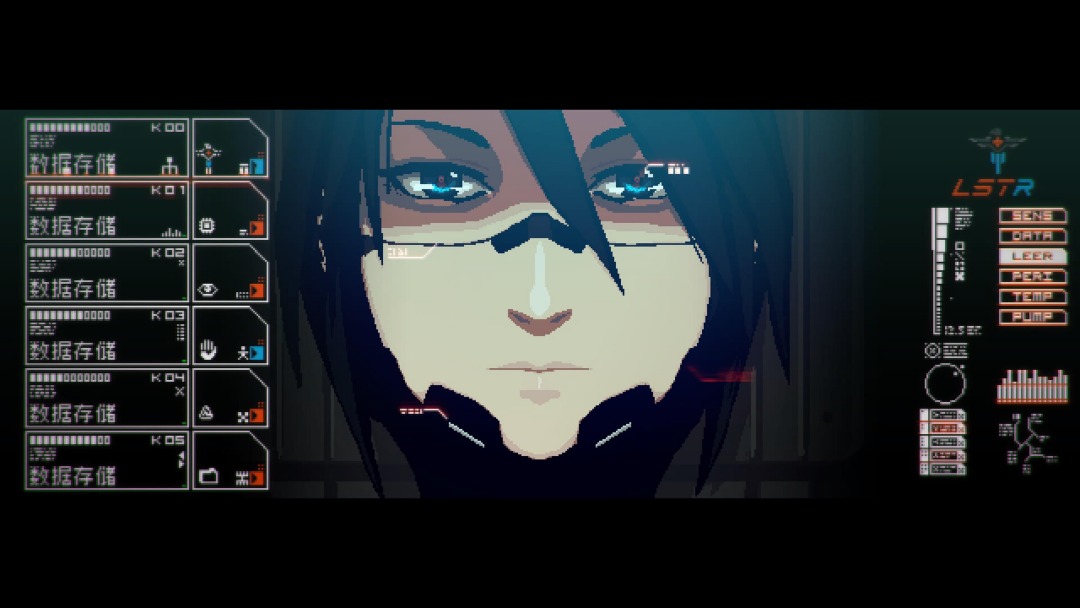
Players control Elster, a synthetic-organic clone of a soldier known as a Replika. Elster will need to explore various locales to find key items, solve puzzles, and do battle with horrendously mutated Replikas that once served the places Elster finds herself in. Puzzles are encountered early and often throughout the duration of Signalis. They range from trial-and-error-based obstacles to absolute conundrums that will have you reaching for a pen and notepad. Despite the difficulty of some of the puzzles, many of them have a practical reason for completing them, further adding to the immersion. One puzzle will have Elster adjusting the voltage inside a fuse box to resupply power to an elevator system. Another involves tinkering with a lock picking device to make sure all the tumblers within the lock line up to access a new area (Elster is not attempting to escape the Imperial sewers under Cyrodiil, however).
Since many of the puzzles have some realistic justification for being completed, players have more incentive to complete them. This is a noticeable departure from the mechanics of puzzles found with one Signalis’s muses, Silent Hill. Many puzzles in the Silent Hill games consist of some surreal key item being applied in a bizarre way simply to open a freakish stand in for a door or barrier to progression. While Signalis doesn’t do much to conceal its inspirations, the puzzles featured in the game are one way where Rose Engine beautifully sets themselves apart from other similar titles.
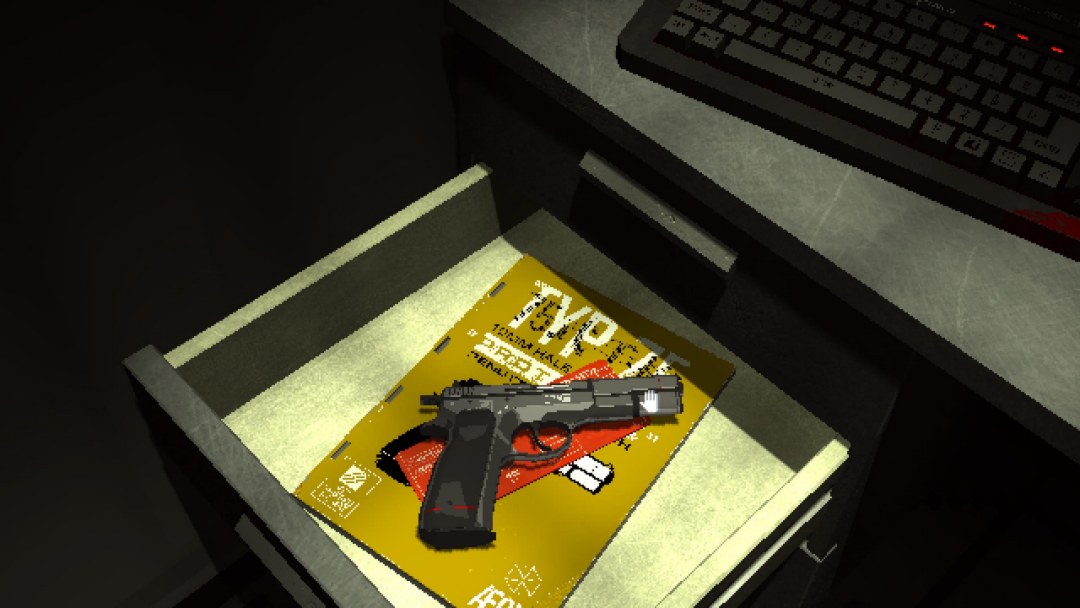
At times, the game will change perspective to a first-person view, in which Elster can get a closer look at an area and interact with various items in her field of view. One such moment involves Elster having to manipulate CO2, O2 and gas dials on an incinerator in order to re-calibrate it, open it up and retrieve a keycard from within. These moments were a welcome shift from the standard fare of Signalis and its top-down, 2.5D camera.
Ammo and healing items are limited, thus players will need to tactically plan each step of their playthrough. This strategizing usually consists of carefully choosing when to engage in combat, and meticulously selecting which items to keep on your person or leave in the safe room’s item box. Fans of the Resident Evil series will immediately be familiar with the quasi-magical, inexplicably interconnected item boxes where players can store excess equipment in rooms which typically also have a save point. Fans of Silent Hill will notice all-too-familiar sounds and screen effects when the player initiates a save as well.
Though it’s true fans of classic survival horror experiences will immediately fall in love with Signalis, I’m hesitant to say that it is a game that anyone will be able to pick up and enjoy. As stated before, this game was made for people who cut their horror gaming teeth on titles like Resident Evil (1996) and Silent Hill (1999). In addition to fixed camera angles, tank controls, and aim then fire combat, Signalis features an inventory management system almost exactly like that of the old RE games. Players have the option of having six or eight inventory slots whilst playing through the game, with the latter option being added in a post-release patch.
Speaking of patches, another patch applied post-release adjusted many of the item placements throughout the different areas of the game. This adjustment was made in order to make sure the player didn’t load up with an excess of resources like ammo or healing items before encountering a key item.
Even with the expanded inventory and other adjustments, casual players might not be prepared for just how integral managing one’s inventory is to a successful playthrough of Signalis. This could be especially difficult for players who have never encountered this mechanic in a game prior to playing this one. As such, Signalis simply isn’t a game for everyone. Many people might say they enjoy survival horror games, but have you seen how some people try to play them? Exactly.
Elster will have various weapons at her disposal to defend herself from the numerous corrupted Replikas she’ll encounter over the course of her journey. Elster can acquire a pistol, shotgun, high-powered rifle, rifle, SMG, magnum revolver, flare gun, and disposable stun batons. Each of these weapons are fun to use, and has a distinct function that sets them apart from each other. You’ll encounter enemies that are easily dispatched with the starting pistol all the way to enemies that absolutely must be confronted with the stronger, late-game weapons. Also, there’s the prospect of boss fights down the road to be mindful of such an occurrence. Each weapon has that ‘weighty’ feel to each shot, which almost serves as an audio cue that these bullets and shotgun shells don’t grow on trees.
Aiming is a mixture of the systems found in classic survival horror games. Players must hold down one button to aim their weapon, and another button to fire. Additionally, a laser sight targeting system similar to Resident Evil 4 (2005) is present here. There is also supplemental targeting reticle that hones in on an enemy the longer the player aims, which addresses some of the frustrations with aiming found in classic titles
The enemies Elster is up against consist of different types of corrupted Replika units that have overrun the various facilities she visits. This corruption comes in the form of tumorous growths overtaking their bodies caused by various mechanical malfunctions and biological phenomena. Despite being synthetic beings, a very organic blight manifests in the enemies, disfiguring them. On top of the disfigurement, this corruption or “sickness”, as some in-game conversations call it, causes the Replikas to mercilessly attack any being in their vicinity, Replika or otherwise.
Signalis’ various enemies display characteristics and carry weapons that indicate their Replika roles within the world before the events of the game. There’s former cooks who slash at Elster with cleavers, former security officers who sport a nightstick and riot shield, among others that have become so hideously deformed, they have taken on a Lovecraftian appearance. Decaying and revealed skeletal and muscular structures, rotting flesh, and exposed biomechanical components are just some of the monstrous features these advanced versions of the corrupted Replikas display.
These enemies can be ‘killed’ per se, but you’ll eventually find they will get back up and continue their assault after several in-game minutes. Enemies can only be truly eliminated through the use of an incredibly limited resource, much like the fuel canteen against the crimson heads in Resident Evil: Remake (2002).
Healing items vary from a slight heal over time to a fast and full heal, though the latter is far more rare to find. Initially, health items might seem plentiful, perhaps even too plentiful. Trust me: you’re definitely going to be using more than a few. Enemies move quickly, Elster not as quickly, and they hit hard.
While the normal difficulty provides a sufficient challenge even for grizzled survival horror vets, an easy mode exists for more casual players and Kotaku journalists. Of course, the survival horror masochists get their fill too with a “survival” mode. The easy mode, however, makes the game feel more like a standard action shooter than a true survival horror experience. Enemies are far weaker and take 1-2 shots to bring them down, and they stay down for a lot longer.
What kept this game from getting a 2 out of 2 for gameplay is my realistic understanding that the top-down, tank-controlled retro survival horror game is not one that is easily enjoyed by everyone, not necessarily due to any glaring flaws.
Story: 2
Even if you aren’t a fan of that retro survival horror style of game that is Signalis, the story alone is worth the struggle players will face with mastering the gameplay loop. I really can’t get too deep into the story without absolutely ruining some of the many big twists and turns featured in the game. You’re just going to have to trust me, bro.

Okay fine, I’ll give you a little; basically, player character Elster is searching for someone she thought was lost to her (a la James Sunderland in Silent Hill 2) and finds herself spirited away to various familiar and unfamiliar places. These places contain disparate narrative ‘breadcrumbs’ that the player will follow in order to piece together what the hell is going on in Signalis. With just enough mystery without overindulging itself, Signalis’ story is one that will keep you glued to the screen at least until that next hair-raising enemy encounter.
Signalis is a story of love, loss, grief, and acceptance of one’s fate. The game asks what might be considered a cliché question in entertainment media today: How far are you willing to go for the ones you love? It’s the specific way the game asks the question through its story, and the way players themselves are allowed to answer, that keeps it from being too cliché. Signalis will challenge you, scare you, excite you, disgust you, perplex you, and pull at your heartstrings, sometimes all within the span of a few moments.
Atmosphere: 2
Signalis is a masterclass on how to build an atmosphere. The methods used here are a love letter to Silent Hill with its rusted, blood-encrusted, otherworldly environments. Despite the clear inspiration, Rose Engine does an incredible job of brewing its own unique blend of atmosphere in this title.
The music is grim, foreboding, and industrial. Each track builds upon the previous one when the player enters a new area. At first the music mostly features slow, somber and unnerving piano riffs. As Elster descends deeper into the madness of her adventure, the tracks become much more percussive, intense even downright overwhelming. This feeling of being overwhelmed by the music makes the composers almost another enemy type that is assaulting the player. The resulting mixture of good gameplay, great visuals and an oppressive sound design make Signalis a stiff but tasty cocktail any survival horror fan would enjoy.
While Rose Engine is only made up of two folks, they did, however, outsource the music production to artists Cicada Sirens and 1000 Eyes. The brilliance of the music of Signalis is hard to put into so many words, thus, players must simply play the game themselves to really understand what I’m talking about. If I had to summarize the score of Signalis it’s like “Trent Reznor and Nine Inch Nails are locked in a room together, and they desperately want to get out. The only way they can do that is by making really loud music.” This statement is absolutely not a dig, but just play the game and you’ll see. All that to say, Signalis would not be as spectacular as it is without the incredible work from the two composers involved.

Signalis bills itself as a “classic survival horror in a dystopian retrotech future.” I couldn’t have said it better myself. The retrofuturistic sci-fi aesthetic is one that will always be compelling, as there are so many directions one can take with it. Interstellar travel and interplanetary civilizations exist within the universe of Signalis, yet analog recording devices such as cassette tapes are still ubiquitous. Large spacecrafts capable of travelling almost as fast as light are commonplace, yet duct tape is still an essential maintenance tool found in these cutting-edge environments.
Despite being a narratively dark game, visually Signalis doesn’t shy away from the use of color. Deep reds, soul-crushing shades of black, bright flashes of white, metallic greys, and electric greens and blues are all featured here and employed to perfection. One way games and movies tend to suffer in this day and age is through the use of a boringly monochromatic color palette, which leaves something to be desired visually. Despite being a very tonally ‘dark’ game as well, Signalis doesn’t overwhelm the player with darkness in the sense that there is a constant absence of light. There is plenty of darkness in the game, sure- but a key piece of equipment Elster must find is a flashlight. Thus darkness, in a sense, becomes its own enemy type that must be countered with the appropriate item. Many rooms and corridors have perfectly executed lighting setups that make use of light as well as the lack of light to add another layer of terror. Obviously, game development technology of the past wasn’t nearly as in-depth as it is today, so seeing games made in this ‘retro’ style making use of modern dynamic lighting techniques is really something to behold.

Another great additional detail in the environment is the existence of multiple, yes that’s right, multiple working mirrors in the game. What was once a very resource intensive, painstakingly created set piece to make can be found many times throughout the experience. Mirrors are even employed in less-aesthetic ways, with enemies’ true positions sometimes being obscured through the use of these mirrors.
Gunshots, inhuman screeches, fleshy squelching, even the beeps and clicks of computers and other devices all sound fantastic. All in all, the sound design stacks up with some of the best in the business. Despite the game’s “retro” graphical presentation, there is no compressed, retro audio here.
Similar to the games that inspired Signalis, the game features a radio module incorporated into gameplay. Elster can tune the radio to frequencies that help her figure out keypad codes, coordinates, and even help her dispatch certain enemy types. Again, like Silent Hill, Signalis’s use of the radio is the perfect garnish on top of an already creepy and overwhelming atmosphere.

The art style and aesthetics pull from a myriad of sources; namely, the works of film director David Lynch, the literature of HP Lovecraft and Robert W. Chambers, specifically The Festival and The King in Yellow, respectively. The paintings of Eugene Bract and Arnold Böcklin serve as additional muses to Signalis’s atmosphere. Furthermore, the influences of Hideaki Anno, the mind behind legendary Japanese mecha anime Neon Genesis: Evangelion are all over this game. The character models, the use of colors, religious adjacent imagery, and subject matter dealing with mental anguish and torment makes one wonder if Anno was somehow secretly involved.
All of these different pieces of inspiration weave seamlessly together to create this dark yet beautiful tapestry that will leave you both in awe and in fear.
Value: 2
At a meager $20 on Steam and intermittently going on sale, Signalis is worth your money, no ifs, ands, or buts about it. From the gripping narrative to the fresh blend of aesthetics, all the way to the big and little scares, this game has it all. Even if you aren’t a big fan of these types of games, I’ve spent a lot more money on a lot worse games than Signalis. Buy it. Love it. Become another Signalis stan and join the ranks of thousands of satisfied gamers.
Duration: 2
A first playthrough of Signalis will take anywhere from eight to twelve hours. Some players have reported their playthrough taking 15-18 hours. My first playthrough has definitely lasted longer than 18 hours, I’ll admit (puzzle hard. Brain no work).
The pacing, however, is perfect. There were very few times where I felt like I was wandering around aimlessly, unsure of what to do next. Oftentimes, if you feel stuck, the answer or item you need is sitting in a new room or one you haven’t searched thoroughly enough. You are rewarded for your time spent with this game, another testament to the love and care put into refining this experience.
As with Signalis’ source of inspiration, Silent Hill, there exists multiple endings to Elster’s quest. Due to the alternative outcomes, players could spend upwards of 30 to 40 hours with this game, meaning they are absolutely getting their money’s worth of time well spent with the game.
Final Score: 9/10
It bears repeating: this game was mostly developed by two people. That’s it. Two people created this absolute masterpiece of an interactive narrative experience. Let that sink in as large AAA developers and publishers continue to generate mediocre (sometimes atrocious) high-budget slop. Sometimes the AAA slop is unplayable upon release. Ten years from now, people will still be playing and talking about Signalis. I can confidently claim that the case will not be the same for a title like Skull & Bones. It is a wonderful time to be an indie videogame developer. Expect to see more indies take the industry by storm while large corporations flounder if the landscape doesn’t change soon.
So, what do you think of Signalis? Is it as groundbreaking of a work of art as people say it is? Or just an imitation of something better? Let me know in the comments! Expect to see more and more consistent work from Houston Vick in the future!

By Houston Vick






 Off the Shelf Media
Leave a reply to Sengoku-Era Survival Horror: Onimusha: Warlords Review – Off the Shelf Media Cancel reply