
Developer: Capcom
Publisher: Capcom
Release Date: May 23, 2025
Players: Single-Player
Review Date: May 24, 2025
Platform:Switch, Windows, PS4/PS5, Xbox One/Series S
Playtime (To Date):~15 hours
MSRP (To Date): $29.99
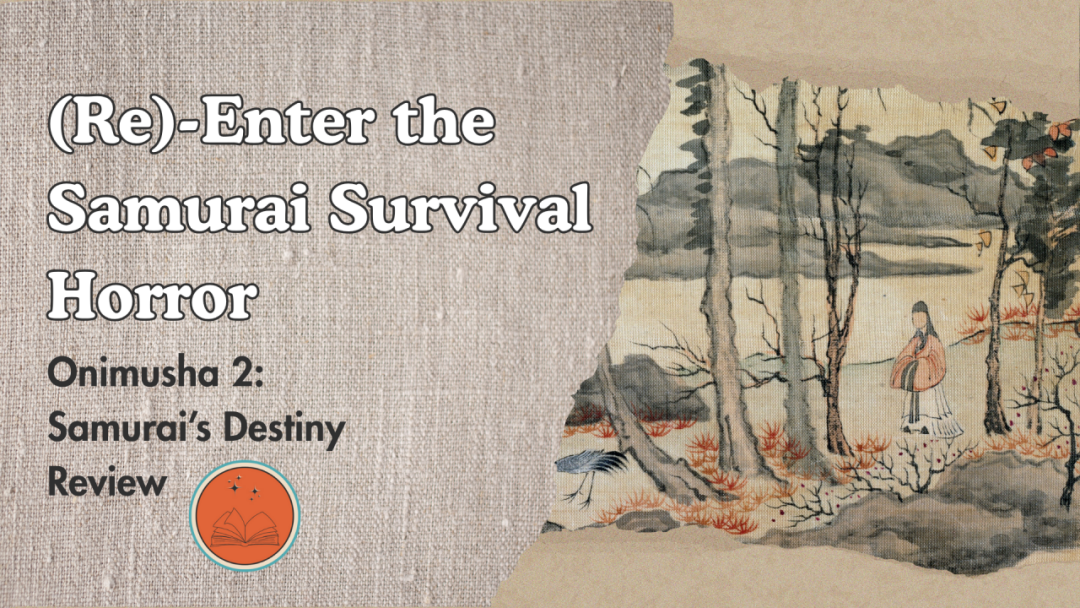
When Capcom’s Onimusha: Warlords Remaster dropped back in 2019, I was looking forward to more Onimusha games coming to modern consoles. Overall, 2019 was a big year for Capcom. Resident Evil 2 Remake dropped in early 2019 and proved to be a massive success. Within the past several years, I recall reading various articles suggesting the 2019 remaster of Warlords didn’t sell well enough for them to proceed with any more Onimusha projects going forward, which left me incredibly perplexed.
In their original run, the Onimusha games were a massive success to the tune of millions of copies sold. Additionally, the series was consistently lauded as being genre-defining and ahead of its time. Not every game translates perfectly over to newer platforms, but this definitely wasn’t going to be the case for Onimusha. For years, it seemed I was going to have to scour the globe (or the internet) for the original copies of these games to be able to play them.
Fast forward to 2025, and one random day in the month of March, I see an HD remaster for Onimusha 2: Samurai’s Destiny is available for pre-order on the PlayStation Store. You best believe I pre-ordered right away. Now, after months (years) of waiting, it’s finally on my console to be enjoyed.
Is it as good as I remember? Or does this remaster fall flat? Let’s take a trip back to Sengoku-era Japan once more and see for ourselves.
Gameplay: 2
If you even remotely enjoyed Onimusha: Warlords, this is going to be a great game for you. Most of the areas where the first entry came up short are addressed completely here. The combat feels even smoother and more responsive than it did even in the original release. There are more weapons, more characters, there’s simply more of everything in general, making this game a step up from Warlords in just about every way.

Players control a new protagonist, Jubei Yagyu, as he embarks on a quest for revenge against the man who put his village to the sword. Jubei is a lot more nimble than his Onimusha: Warlords counterpart, so the combat is even more snappy and fast-paced than previous entries.
Absorbing souls to heal, regenerate magic, and upgrade gear makes a return, as these are perhaps the most crucial gameplay mechanics outside of swinging the sword in Onimusha. The same rules of soul gathering apply as in Onimusha: Warlords, but there is an additional soul to absorb not featured in the previous game. Purple souls will now sometimes manifest when striking certain genma. Absorbing five of these large, slow-moving souls will enable Jubei to make his transformation into the titular Onimusha– a literal “demon warrior.” In this mode, Jubei has increased strength, movement speed, and the soul absorption move becomes a powerful close-range projectile attack. If you played any of the Devil May Cry series, this mechanic closely resembles Dante’s “Devil Trigger” mode.

Now, back to this specific Capcom game. Another new mechanic featured in this entry is the inclusion of various allies that can help Jubei on his quest for revenge. These characters each have their own unique style they bring to the fight, making them far more than meat shields to divert the attention of enemies. There’s a young ninja who employs the typical tactics associated with the fleet-footed assassins of medieval Japan. There’s a spear-wielding drunkard who acts as a sort of comic relief. Another ally brings various firearms to battle. The other buddy that assists Jubei is the ever-beloved trope of a ‘sword lady’- a beautiful, armored woman who brings a double-edged straight sword into combat. These allies can tag along with Jubei at certain sections or can be found randomly doing battle with various genma when the player enters a certain room. The existence of these four unique fighters keeps a great level of variety in the gameplay, especially considering the player will be travelling to and from the same locations multiple times during their playthrough.

Allies can be given various gifts that increase their affinity with Jubei. Giving your allies gifts will usually result in them giving you something in return. These traded items can include healing items, character upgrades, or even other gifts that another ally might appreciate. Each character has their own hobbies, interests, and proclivities towards certain gifts. For instance, the spear-wielding drunkard will graciously accept a gift of any kind of alcoholic beverage. Some gifts, however, are comically rejected by your allies. One such example occurred when I tried giving the ninja a decorative wind chime.
“A ninja prefers silence!” he snapped, before an onscreen message appeared, reading “You quietly take back the wind chime.” This mechanic added a great additional believable layer to the gameplay that I wish more games would utilize.
Warlords featured several weapons Samanosuke could acquire over the course of his journey, and in this entry, the diversity of weapons has been dialed up tenfold. The fire, wind, and lightning blades return from the first entry. Additionally, Jubei can make use of an ice spear and a large hammer imbued with the power of the earth. Our samurai protagonist also has access to three different ranged weapons. These ballistic alternatives consist of a longbow and a Tanegashima matchlock rifle like the first game, but the new weapon featured here is a three-shot burst rifle that absolutely shreds the weaker enemies. Jubei’s allies can also be outfitted with different weapons and armor from their defaults as well, adding another level of customization not featured in the prior installment.
Aside from several additional ingredients that only add to Capcom’s winning formula, the same game you loved in 2002 is still here, just with even deeper gameplay. In the 2025 remaster specifically, several new features were added that even further enhance the player’s experience with Onimusha 2. One such modernization added includes auto-saving. That’s right, every time Jubei enters a new room, the game will automatically save. This means that if you die, you won’t go all the way back to the last magic mirror of your most recent manual save. I honestly could go either way with this mechanic. If they didn’t add it, as a classic fan, it wouldn’t have bothered me too much. A lot of the challenge from series like Onimusha and Resident Evil came from making saving a scarce or consumable resource. The existence of auto-save removes this challenge almost completely, but there were several points in the original version where I definitely would’ve been ‘saved’ by this new mechanic. Auto-save is almost a ubiquity in all kinds of videogames today, so it makes sense that Capcom saw fit to make sure it was in this remaster.
Another feature added comes in the form of being able to swap weapons on the fly. The addition of this mechanic alone elevates Onimusha 2’s remaster to heights even far above its original release. One of the greatest nuisances with having to go back and play the original versions of these games is having to artificially pause the game in order to swap weapons. Now, Jubei can adjust for any situation without pulling the player out of the rhythm of combat.
Story: 2
***Light spoiler of Onimusha: Warlords ahead***
An entire leap forward in comparison to its first installment, Onimusha 2 dials up the drama and overall personality of the story in general. Since the story has so many more characters compared to Warlords, there are a great deal more interactions, relationships, and even conflicts between Jubei and his compatriots.
Onimusha: Warlords seemed to leave a bit of ambiguity about protagonist Samanosuke’s fate. When Onimusha 2 begins, several years have passed since Samanosuke’s adventure. Oda Nobunaga’s conquest of Japan persists and has cut a bloody swath across the island nation. It seems no village is safe from the onslaught of the Oda clan and their undead genma soldiers.

The game opens with a visual depiction of the brutality of the Oda clan with its assault on Yagyu village, the home of our protagonist. After Nobunaga and his men finish their ruination of the village, protagonist Jubei Yagyu is shown relentlessly hustling home, only to arrive after the primary group of Oda forces have moved on. After handling a few Oda clan stragglers and attempting to speak to a few dying villagers, Jubei hears an inhuman voice beckoning him to a secret cave within the village that was once sealed. Once Jubei locates the source of the voice, it is revealed to be Takajo, an oni or benevolent demon that has dwelled in the cave for some time. Takajo informs Jubei of five magical orbs that, when combined, will grant Jubei the strength and power to defeat Nobunaga. Thus, Jubei sets off on his quest after Takajo reveals the location of the first orb to be in a nearby gold mining town.

Upon leaving Yagyu village and arriving at the mining town Imasho, Jubei is quickly introduced to the four companions he will be alongside at various points in his adventure. This supporting cast includes Magoichi Saiga (sometimes written as Saika in other media), a gruff but loyal rifleman who wishes Japan could live in peace. He resents the Oda clan and the upheaval it has caused in his own life and the entire nation’s. Another ally encountered is the monk Ekei Aknokuji, a former warlord who entered monkhood after suffering a devastating loss at the hands of the Oda clan. He is fond of drink and women, and initially it seems that this is all Ekei’s character provides. Eventually, his tragic backstory is explored more deeply, humanizing him and adding a level of emotion and drama quite groundbreaking for a PlayStation 2 game originally released 23 years ago.

Additionally, there’s Kotaro Fuma, the arrogant young chief of a ninja clan who creatively helps Jubei out of a jam more than once. And last but certainly not least, the sword lady, Oyu. Mysterious and ethereal, Oyu plays a major role in the story in addition to serving as Jubei’s love interest. I don’t want to reveal too much about her role in the story for fear that it could domino into big spoilers for the game’s wider narrative. Understand that while Oyu’s appearance is indeed designed to appeal to the male gaze, her role in the narrative means she’s not just a pretty face. Despite the impracticality of wearing what appear to be stockings and garters to supplement her steel armor cuirass, she’s dressed pretty modestly in comparison to many of the standard ‘armored female warrior heroine tropes’ seen in other media. These four characters are all unique, believable, and lovable. Their inclusion in this game helps bolster an already well-crafted narrative.

The story of Onimusha 2 will keep players glued to their seats, eager to see what happens next. Where Warlords has a rather simple premise that might seem like it doesn’t stack up to modern standards, Onimusha 2’s story stands the test of time. Even though players will get a very in-depth recap of the first game during Onimusha 2’s opening moments, I would encourage players to also play that first game just so they can see one of the most impressive technical marvels of videogaming of the time, not necessarily because you need to know the events of that first game to appreciate this one.
Atmosphere: 2
Like the improvements with the gameplay and story, the atmosphere gets an upgrade in this sequel as well. The environments are much more diverse and dynamic. There’s more color, more enemy variety, more NPCs. There’s simply more of everything. One such example of this upgraded atmosphere comes upon arriving in the mining town of Imasho. Dozens of NPCs line the streets. All of them look unique and have their own animations, clothing, and posture that tell little stories within the environment so beautifully. There’s a finely dressed courtesan waving on the corner, a worker jogs deftly with a carrying pole and baskets, and a ronin paces down the avenue upright and commandingly.

All of these pieces fit together to make an absolutely beautiful simulated Sengoku-era town in a game that is over two decades old. The fact that the Imasho section happens so early on means the player gets to appreciate this moment without a significant time investment. This area further draws players in with its depth, spurring them to keep playing. Since we’re not confined to one castle for the duration of the playthrough, there’s simply so much more to see. This means there were a lot more opportunities for the developers to get creative with how the environment and atmosphere would assist in the telling of this story.
One such way the atmosphere probably won’t wow players is the voice acting. Some of these performances are decent enough to get the job done. Others are just hammy and over the top. One of the worst offenders of this is, unfortunately, the lead role. Jubei’s English language voice actor, Jacob Barker, seems like he’s simply trying too hard to emulate what he thinks a samurai’s voice sounds like. At times, his portrayal borders on a caricature, which is pretty funny to me. Others, however, might not find this as charming, perhaps even offensive. There’s an option to toggle the original Japanese voices, which many anime purists might opt for by default. Though the voice acting isn’t this game’s crowning achievement, it’s simply an indicator of its age. There was a time when even the biggest budget game developers couldn’t afford to book Keanu Reeves, Hiroyuki Sanada, or Margaret Qualley for the cast of a PS2 game. Where would the money for the actual game have gone?

The music is great in this entry as well. A lot more variety here than in Warlords. Some areas of the game have minimal or no score, simply providing a player with ambiance. When Jubei has exited Imasho town, a long and winding mountain path stands between Jubei and the gold mine. All the player hears in the way of sound is the crickets, birds, and eventually, the heavily armored footsteps of Oda clan soldiers initiating an ambush. The fixed camera angles in this area do a great job of concealing the soldiers until they’re right up on the player. Even in broad daylight, Onimusha 2 finds a way to create a great survival horror moment at a time when players might think they’re safe.
To add to the surprise of the mountain path ambush, Imasho is a zone where Jubei’s sword is sheathed. He cannot draw his weapon and engage in combat with anyone in the town. Unless players speak to a specific NPC in Imasho, they won’t be privy to the threats lurking on the road out of town. Little details like the ones NPCs share reward players for exploration, and supplement the already great narrative and atmosphere alike.
All in all, Capcom knew they had to continue raising the stakes when it came to every aspect of this game, and they did not neglect the atmosphere. Despite a few quirky moments of voice acting, Onimusha 2’s atmosphere provides both a wonderful dark fantasy setting while still maintaining a faithful depiction of medieval Japan.
Duration: 1
While significantly longer than its predecessor, Onimusha 2’s remaster gives the player most of the unlockable content immediately upon starting up the game. These extra game modes are fun, but being available from the start removes the incentive to beat the game on higher difficulties, as these were mostly hidden behind higher difficulty levels in the original release. This means many players will end up spending less time than they would otherwise. I understand the move, however, as Capcom is probably catering to the more casual gamers who don’t wish to subject themselves to “Hell” difficulty just to unlock a goofy minigame.

Players can expect their first playthrough to take anywhere from 12 to 15 hours if the main story is their only focus. If a great deal of time is taken to explore to find and complete all the side content, the runtime can balloon to well over 20 hours. Even still, the duration suffers a great deal for the classic, dedicated gamer. Eliminating a great chunk of time by making all this bonus content unlocked from the start, players who enjoy to 100% complete something and unlock things themselves are getting robbed here.
Value: 2
For one of the best samurai and survival horror experiences to date, $29.99 is an absolute steal. Great gameplay and great story for such a price is a rarity in this day and age. Personally, I think everyone ought to go buy this game right now so Capcom can hustle up on remastering Onimusha 3: Demon Siege and Onimusha: Dawn of Dreams.
In all seriousness, $29.99 for a game that will take 20 hours or more to finish the first time is an absolute steal. When I originally purchased this game back in my childhood, I think it was around the same price as it was today, which is pretty funny to think about considering how much most games cost retail or online. What are you waiting for? Go buy this and relive one of the best gaming experiences ever released on the PlayStation 2.
Total Score: 9/10
In closing, fans of Onimusha, rejoice! A brand new Onimusha is currently in development, set for a 2026 release. In short, it looks awesome. Onimusha: Way of the Sword, as it’s titled, will feature a new protagonist for the series, Miyamoto Musashi. Though this name might be new to the Onimusha series, he’s very much a well-known figure within Japanese history. Regarded as a kensei or sword-saint of Japanese history, Musashi is well-known for pioneering and recording many of Japan’s most time-honored swordsmanship techniques. Capcom seems to be really excited about this, as they’ve been hyping it up quite a bit this year so far. The website is in-depth and detailed, and all other promotional material I’ve seen is incredibly high quality. Hopefully, the amount of money being spent on marketing is an indication that Capcom is already proud of the work they’ve done. Normally, I’d take a developer’s confidence with a grain of salt, but Capcom has a rich history of absolutely nailing it with their flagship series in recent years, so I’m going to believe in them this time. Anyway, I digress.
What did you think of this Onimusha game? How does it compare to the series’ first installment? Are you looking forward to Way of the Sword? Which series should I hone in on next?

By Houston Vick


Leave a Reply