
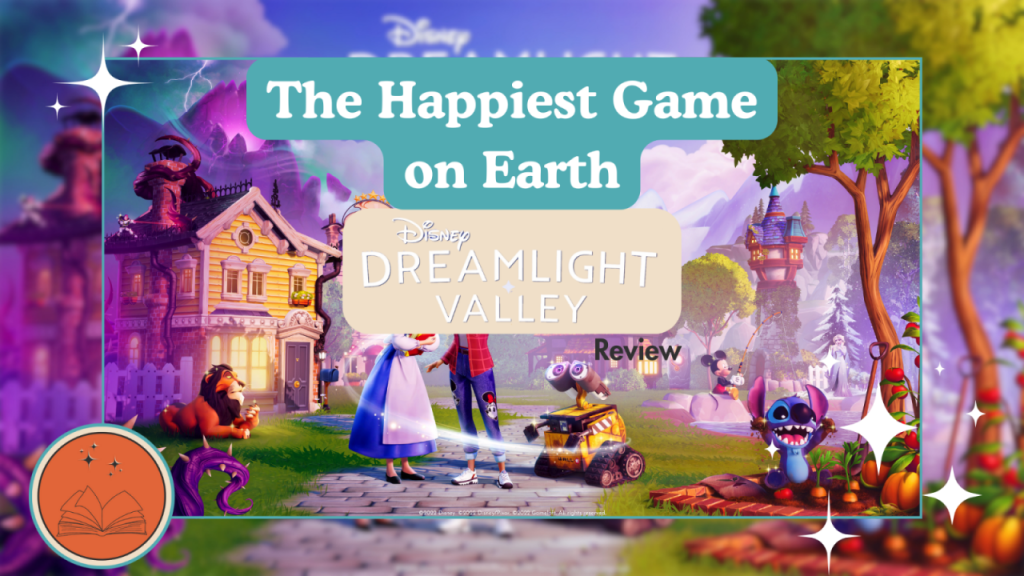
Genre: RPG, Casual, Simulation
Developer: Gameloft
Publisher: Gameloft
Release Date: December 5, 2023
Players: Single-Player/Multiplayer
Review Date: July 29, 2025
Format: PC
Playtime (To Date): 138.4 Hours
MSRP (To Date): $39.99
Years ago, I had heard rumors that there would be an “Animal Crossing-like Disney game” coming to the market. I’ve always been a fan of Nintendo’s Animal Crossing series and consider indie developer Concerned Ape’s Stardew Valley to be an absolutely perfect game. So, of course, I was pretty excited once Disney Dreamlight Valley was finally announced.
While I would not quite call myself a full-blown ‘Disney Adult’ in the sense that my house is full of Disney decor and I spend my time reciting Disney facts, I would be lying if I said that I didn’t still enjoy both new and classic Disney movies and love family vacations to the theme parks even as an adult (If you haven’t visited Epcot while being 21 and over, you’re missing out).

Despite being a fan of Disney as a whole, I had never grown up playing Disney videogames like the Kingdom Hearts series, so I wasn’t sure what to expect from this heavily anticipated launch.
However, I’m a big enough Disney fan to have had this game on my radar months before the Early Access version was released in 2023. Still, in all honesty, I didn’t purchase the game right away. I waited until it was out for about a year before I began playing. I feel confident saying it was worth the wait, not only because it’s a great game but because of the continuous updates it’s undergone since launch, which have (mostly) been improvements.
Gameplay: 1
Disney Dreamlight Valley covers much of the same ground that similar titles in the genre cover, but it does most of them significantly better.
For instance, I’m a pretty big fan of Animal Crossing: New Horizons. A major feature of any Animal Crossing title is that the game progresses in real time. Each new day in real life is a new day in the game. Seasons pass, holidays are celebrated, and annual events occur. It is a fun strategy for encouraging players to return to the game, even if they have already completed the story mode or haven’t picked up the game in a while.
Disney Dreamlight Valley employs a similar strategy but removes all of the worst features associated with waiting for time to pass in real life.
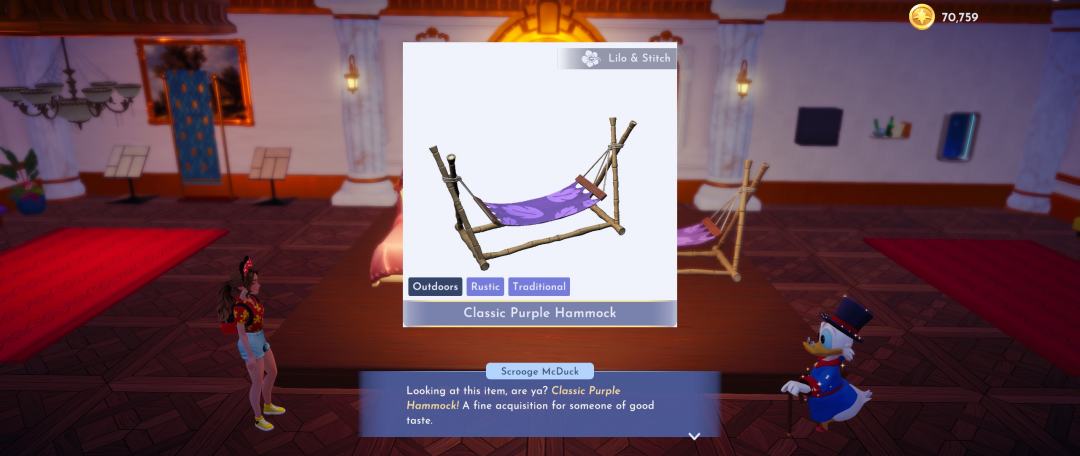
Each day, players can expect to see new items for purchase in Scrooge McDuck’s Store, which you’ll want to purchase when you see them, as there is no telling when the same item will appear again. Yet, unlike AC: NH, Scrooge’s store never closes. Similarly, the many villagers, comprised of all your favorite Disney characters, never go to sleep. So, if you’re a player like me who typically only manages to game at the oddest hours, you need not worry about having nothing to do if you can’t log on to your save file until 11 pm at night. Every character will still be there to engage with, and every shop will still be open.
While the game progresses in real time, ie, morning in the real world is morning in the game, it is rarely an impediment to progressing, though there are always a handful of missions that are time-sensitive.
While the timelines are much improved, none of the game mechanics is new. As a simulator game, farming, of course, plays a major role. The easiest way to earn Star Coins, the in-game currency, is through farming. Use your shovel to plant seeds, tend to them with your watering can, then go catch fish with your fishing rod, and mine for ore to use in crafting with your trusty pickaxe. See, it’s all pretty standard.
Yet, the farming feature is vastly improved from that of Animal Crossing and other similar games. Instead of waiting days for your fruits and vegetables to be ripe for the picking, the many trees and bushes will spawn new fruit every 20-30 minutes. Your crops, if cared for properly, will also have reasonable growing times. This timeline allows the players to earn Star Coins at a desired rate.
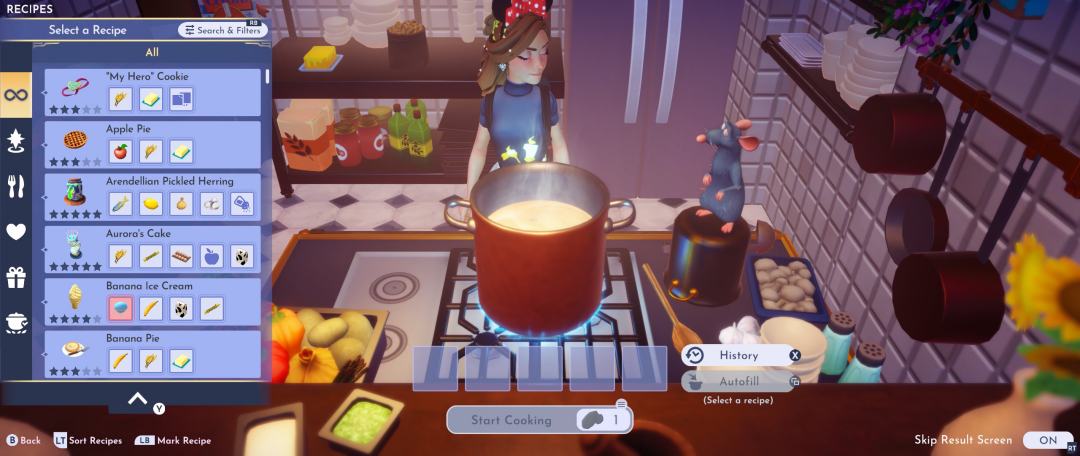
The game also features a cooking aspect where the player can serve up dishes at Chez Remy or Tiana’s Palace to earn Star Coins, build relationships, and accomplish daily challenges. Don’t stress about trying to memorize all of the orders and ingredients for every dish. The game gives you the desired recipes as needed to make serving easy, while discovering new recipes is where the challenge lies.
Yet, despite all of these improved features to otherwise standard gameplay, I frequently experience glitches on my PC while playing this game after massive updates, of which there are many. On the rare occasion, my game will also freeze up. User error is always a possibility, but for how many hours I have logged in this game and how often the developers are making changes, I would argue it is in the realm of possibility that these updates sometimes don’t mesh as seamlessly as both the developers and the players would like. The result: minor glitches.
Though annoying, none of these glitches have ever fully broken my game or enraged me to the point of deleting it off my computer. Yet, considering that these glitches exist at all, and after the game has been available for so much time, it can’t earn a perfect score.
Story: 2
When I purchased the game, I was completely unaware that there would be a story to follow. For me, a new simulator game with iconic theming was enough, so the story was a pleasant surprise.
In writing this review, I came across earlier articles, such as this IGN piece, critiquing the game for being launched with an incomplete storyline. As I mentioned in the introduction, I did not play this game right away and certainly did not complete the story quickly either. For me, I was able to have a seamless experience following the base game’s storyline.
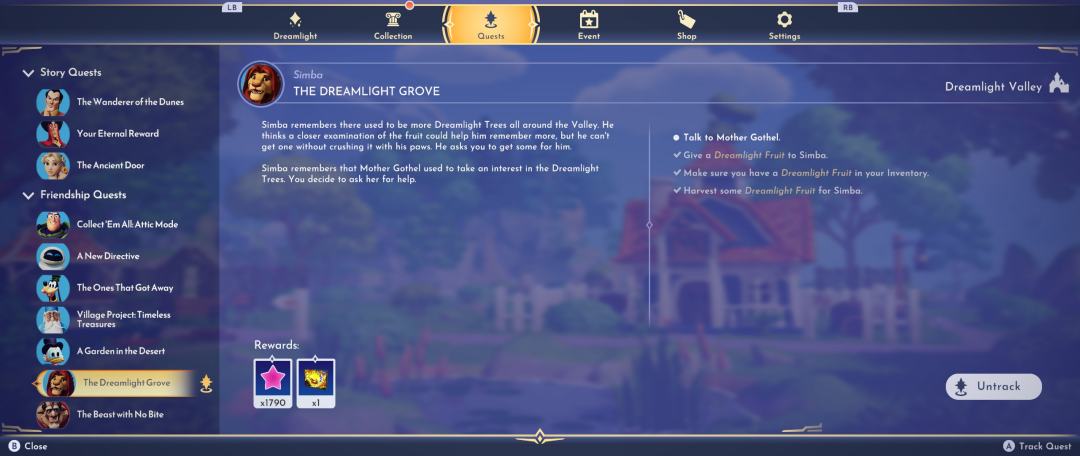
In essence, you’ve ‘fallen asleep’ and re-enter a realm that has since been long forgotten in your mind: Dreamlight Valley. Greeted by the wizard Merlin from the Disney classic, The Sword in the Stone (1963), you find that the valley you visited often as a child is not what it once was. Instead, many of the characters that called the Valley home have fled as a dark force called “The Forgetting” has taken over.
Merlin quickly enlists your help to return the Valley to its former glory by helping the lost or forgotten villagers and solving the mystery of The Forgetting.
When I first started the game, I audibly groaned as the story began. Immediately, I thought the game would be too childish and simple to keep my attention. Yet, about a year later, it’s my second most-played game and I’ve barely even begun playing the first of two DLCs, which I won’t even cover in this article.
Ultimately, the reason why the story received a high score is for the sheer fact that it touches on themes that many of its players, especially the older ones, can relate to. It was also completely unexpected.
As we age, we let go of childish things, or at least, we try to. But what happens when we do? What happens when we allow ourselves to gain that sense of childlike wonder and freedom back?
That’s the question this game aims to answer. It isn’t life-changing, but it certainly isn’t a waste either. Befriend your favorite characters, learn the secrets of the Valley, and uncover the mystery of The Forgetting. It’ll take you on a pleasant ride you may not have known you needed.
Atmosphere: 2
It should go without saying that if you aren’t a Disney fan, you probably won’t love the atmosphere. While you interact with the characters and explore the world, enjoy the original music created for the game or the instrumentals of many Disney classics like “You’ve Got a Friend in Me” from Toy Story playing in the background. Even if you aren’t a Disney super fan, the nostalgia and cheerful ambiance add to an overall charming experience.
Earlier in the article, I mentioned that the game employs the use of real-world timing and functions. While this is true, one aspect of the game that is not influenced entirely by the seasons changing is the map.
In AC: NH, the winter season features snow on the ground, while the fall season engrosses the player in the tranquil falling of autumn leaves. In Disney Dreamlight Valley, the landscaping does not change based on the seasons. Instead, the map features a variety of biomes befitting the many iconic characters that can reside there.
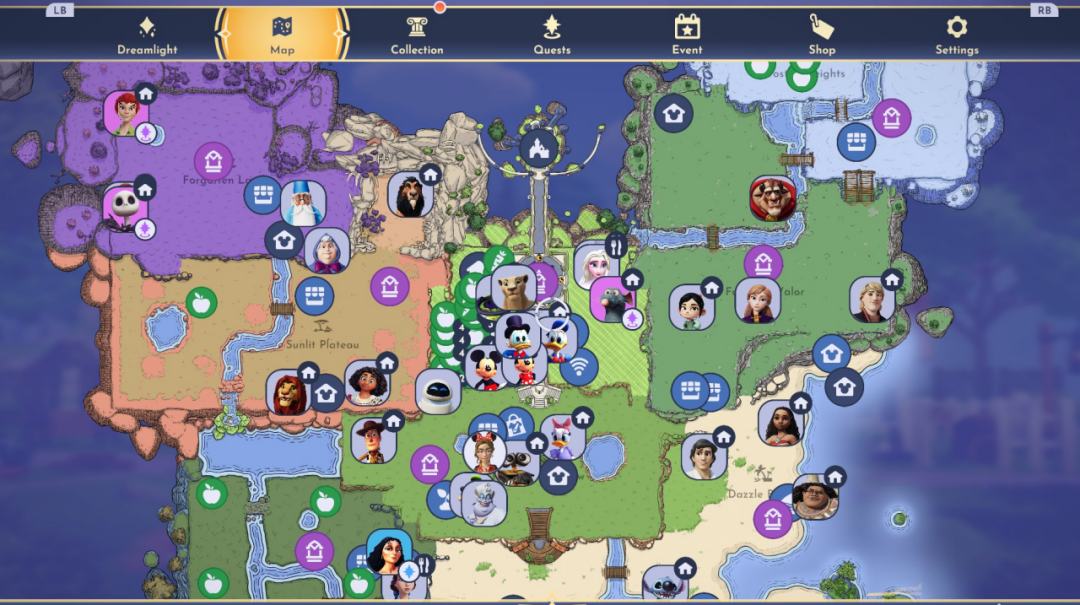
Visit Moana on the sandy dunes of Dazzle Beach or collect snowballs with Olaf in the icy tundras of the Frosted Heights. Decorate each biome to your heart’s desire or let your imagination spew all over the place. The world is yours to decorate as you wish.
And, if it is really so important to you to decorate your home and Valley with seasonal decor, there’s plenty of that too.
Value: 2
At the time of writing this article, the base game is priced at $39.99, with each of its two available DLCs, A Rift in Time and The Storybook Vale, each being priced at $29.99. For the purposes of this article, only the base game is being evaluated.
In my view, the price is justified given the amount of content and time able to be spent playing. It falls comfortably between some games that are now being listed around $79.99, like Nintendo’s Mario Kart World, but isn’t quiet as cost-effective as titles like Stardew Valley.

Not only is the base game full of hours upon hours of content, but many of the major updates that have added characters like Peter Pan, Princess Tiana, and the Cheshire Cat were all free for players who already owned the base game. These updates and additions, assuming they continue, only add to the value of the game.
However, a common critique of the game I’ve seen is the inclusion of in-game microtransactions, which feels all but standard in today’s gaming world.
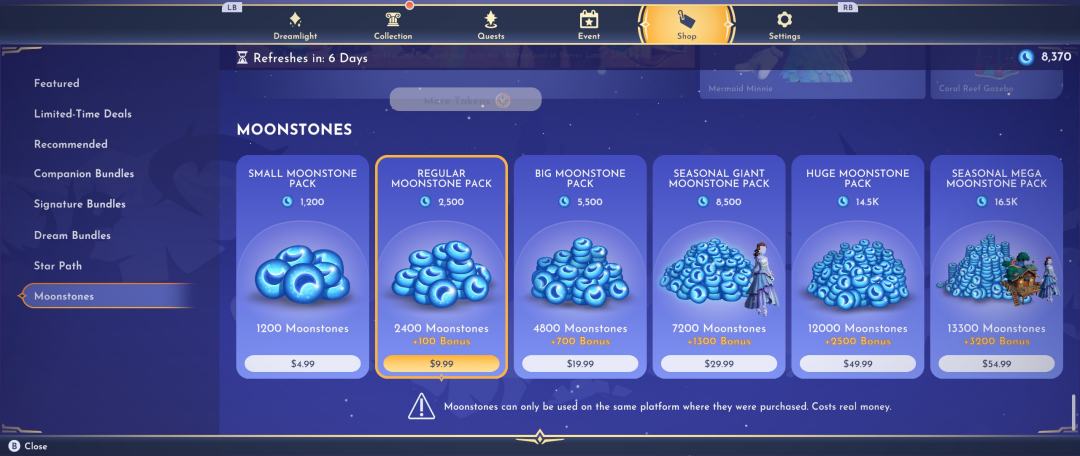
While the player earns Star Coins to use for standard items, furniture, clothing, materials, etc., the game also features Moonstones, which can be earned or purchased for real currency.

The Moonstones primarily allow the player to purchase aesthetic upgrades and décor items via the Premium Shop or allow the player to unlock additional items during Star Path events, which are limited-time events that offer players the ability to earn Moonstones by completing daily challenges and tasks.
Of course, purchasing the Moonstones is the easiest method. However, the game offers players a plethora of options to earn these instead. During special events, players can complete daily tasks to earn anywhere from 10-50 Moonstones but each day the player logs on, a blue chest is randomly spawned on the map that also awards the player Moonstones for finding it.

Players can also engage in online community challenges called DreamSnaps, which assign a theme and criteria that photo submissions will be evaluated on. For instance, a recent theme was centered around Captain Hook and new items from the Peter Pan update. I took my most pirate-like items, strewn them across Dazzle Beach, and had Peter Pan himself pose for a photo with my character for the submission. The community votes to award the best submissions with Moonstones, and those who participate in the vote also earn up to 50 Moonstones for every challenge. With little real effort and using items I already had, I secured a nice portion of Moonstones with no transaction required.
While I understand and acknowledge the argument that microtransactions in a child-like game are encouraging the “pay to win” style, there are so many options and opportunities to earn Moonstones for free now that I feel this argument isn’t one worth detracting a point for.
Duration: 2
By far one of the most impressive features of this game is simply how massive it is. I was stunned when I not only discovered how large the base game was, but when I realized how many long-term additions the developers have planned for.

When inside the Dream Castle, where many of the Realms can be accessed to unlock new characters, players will notice that many of these doors remain unmarked, not indicating which characters or realm will exist behind the door. I can only assume that this was built into the game because the developers have a plan to fill those spaces, and so far, I’ve been correct about that. Some characters, such as Peter Pan, have only recently been included in the game, but the area through which to access Peter’s realm has long existed in the game already.
In around 130+ hours of playtime, I really only was able to accomplish finishing the base game’s storyline and unlocking the base game characters, plus the ones included in major free updates. In fact, I’m not even entirely done unlocking and reaching max friendship level with some of those characters, even still.
While that is a decent amount of time to dedicate to a videogame, the vast majority of it has been genuinely enjoyable. Though some tasks can feel like repetitive fetch quests, most of them really do not require too much time, especially if you are good about reserving your materials to have on hand for when it is needed. You will save yourself a significant amount of time by storing and holding onto items like flowers, gemstones, wood, and other forgeable items. You can see our beginner’s guide here for more tips.
Though it is not what I would call a replayable game, it is a considerably large one, and that cannot be understated.
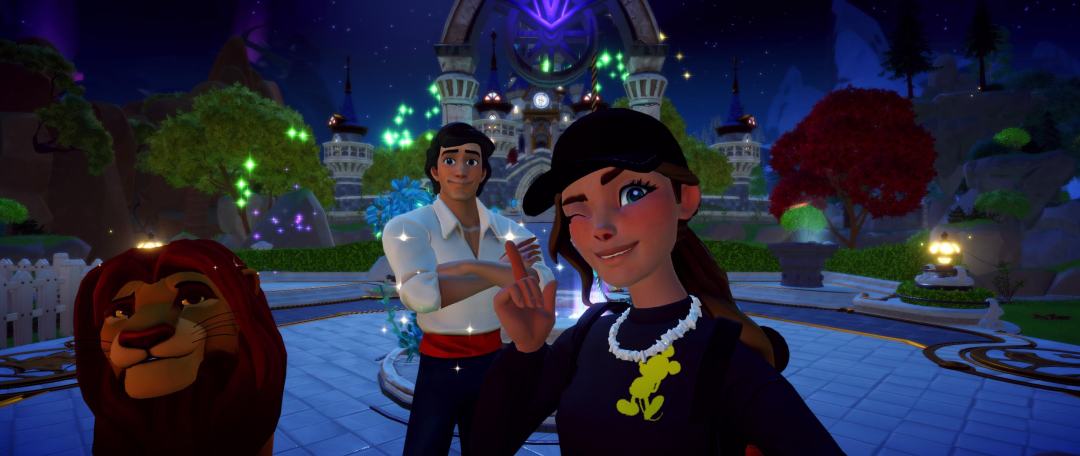
Total Score: 9/10
While it received some mixed reviews at initial launch, much of the discourse around Disney Dreamlight Valley today is pretty positive. This can primarily be attributed to how much time and dedication have already been devoted to the game by developers, but also for how much will be dedicated to the long future of updates and DLCs that await.
Don’t play it expecting Kingdom Hearts; you won’t get it. Don’t play it expecting Stardew Valley; you won’t get that either. Instead, you get a game that is exactly as it was described: an Animal Crossing-like Disney game. For me, personally, that was just enough.
If that description tickles your fancy, Disney Dreamlight Valley is worth having on your list. Have you given it a try yet? Let us know your thoughts in the comments.




 Off the Shelf Media
Leave a reply to emilyprovostwrites Cancel reply