
PC gaming has always been part of the industry, if not the most palatable for the larger audience. With the recent rise in gamers switching from the easy-to-digest consoles to the PC marketplace, one can expect common pitfalls to accompany the many benefits.
In fairness, one of the most positive aspects of PC gaming is a two-sided coin, that being the accessibility of indie developers. One can find incredible titles, such as Schedule I, that blend concepts from many sources to create a unique and rewarding experience without the limitations of a boardroom to downvote the often-times rewardedingly absurd. Unfortunately, you can also find titles that are pure knock-offs, store-brand, exploitative, hype-train titles that only aim to sell slop because of a sudden market surge. For every popular game topping the charts, you could easily find three clones lacking the development to be called a proper game. The Unreal Engine and Steam Marketplace make it incredibly easy to create these lackluster versions.
Not all are so nefarious or bad. Many titles may find inspiration from different games and use their own insight and ideas to create a better system or one that is a unique approach in a similar genre. To showcase the developers who managed to see through the noise and deliver a great game, whether they are a major organization or a one-man team, we’ll be launching a “There Can Only Be One” series to put a more formal pin on titles that we have found to be the very best in class.
Now, not all titles that are similar are entirely malicious, but that still leaves a massive amount of attempts that fall short of our top pick. Some will obviously still be good titles and may come down to features that are more personal preference than functionality for our choices, so hopefully, even if you may not agree with our picks, we can leave you with enough information for you to make the best purchase and avoid buying so many versions of a game that are only shades different.
A look at Mount & Blade
The topic in this article is the latest iteration in what was an incredibly niche franchise: Mount & Blade. For me, exploring these games started in 2015, seven years after the launch of the first title. It was rough around the edges, obviously not fleshed out perfectly, but the core concept and execution made for a fun and completely unique title.
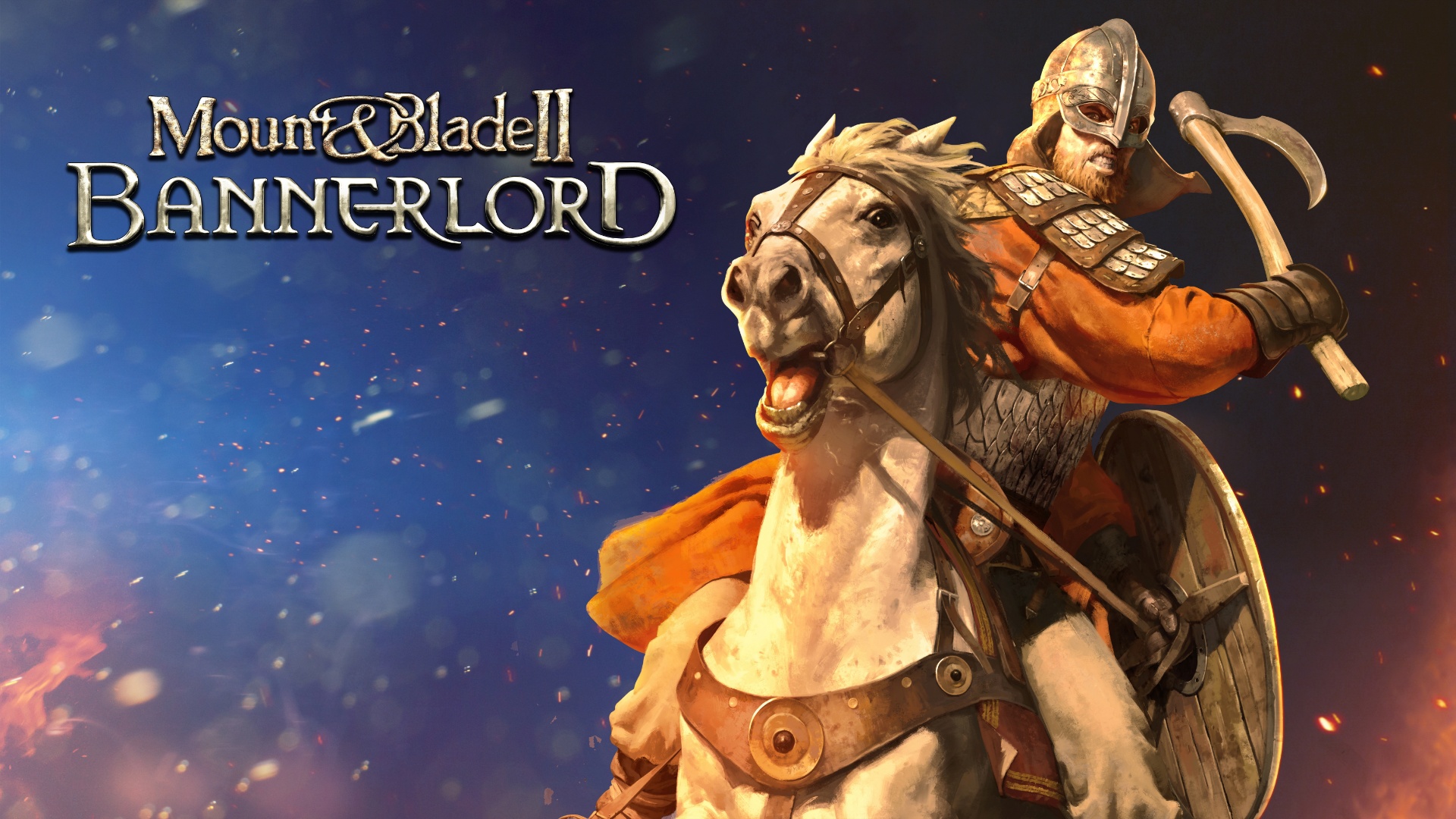
In Mount & Blade, you are given complete control of your destiny, especially now in Mount & Blade II: Bannerlord. You start the single-player game as a lone warrior looking for the remains of your family, should you follow the main quest. Each game in the franchise gives you free rein from the beginning to make any type of choice you wish. You can ignore all the story objectives and become a trader navigating between nations at war and raiders. You can join beside an outcast of a kingdom attempting to retake control they feel is rightfully theirs, or even build your own forces and attempt to conquer the world with the help of companions you make along the way.
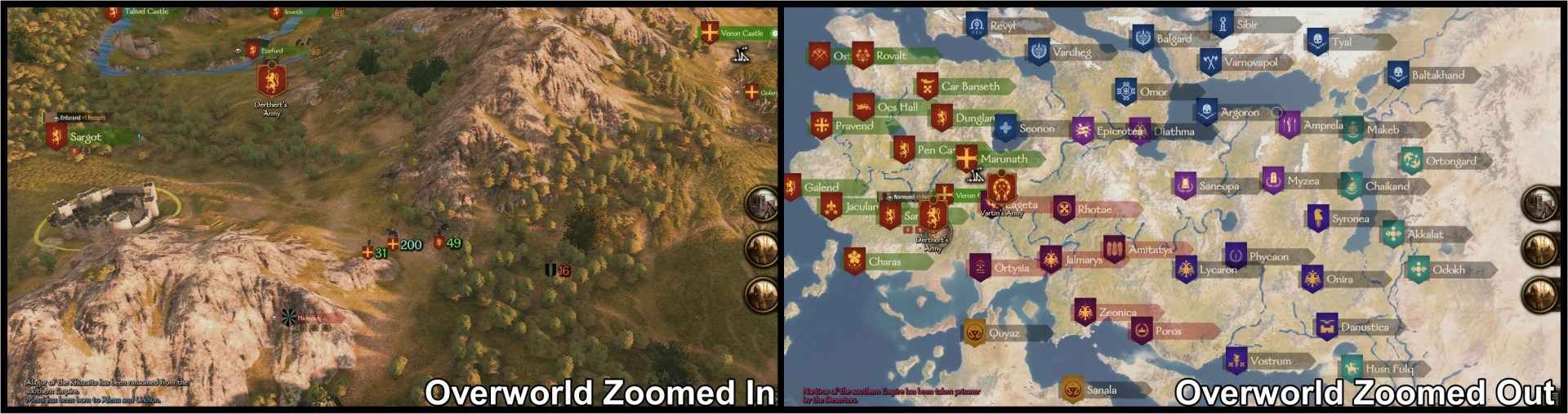
The game is set sometime around the year 1200 in a fictitious world called Calradia. Players control their character in two distinct game stages. One is either first or third person in locations such as castles, battlefields, or arenas. This allows the character to walk around the environment and give orders to their troops in real time. Similar to how one might give squad orders in Tom Clancy’s Ghost Recon Future Soldier, but on a unit count that can reach the hundreds, with formations more in-depth than Age of Empires II: Definitive Edition. These real-time battles are triggered when entering locations with hostile enemies or encounters from the overland map. This means you have two types of movement in the game (excluding boats for now), one over-the-shoulder perspective and another focused on how you and your troops move as one across the world, similar to older Final Fantasy titles.
Almost everything you do in the game is governed by skills you can only upgrade through actually using the skill, which is oddly refreshing compared to other recent RPG titles. You can make anything out of the game that you wish, but you have to be the one to do it. It combines individual skill in combat as well as tactics and logistics to maintain and lead an army. There is nothing quite like it, until recently.
A competitor emerges
In April of 2024, two titles were released on Steam, only three days apart, that both took aim at the success of such a dynamic game series. Bellwright, which was released on the April 23, 2024, and Manor Lords, which dropped on April 26, 2024. Both games require strict resource management as well as offering a real-time strategy (RTS) and tactics combat environment.
Manor Lords may be the most anamonapoetically similar to Bannerlord, but probably the farthest in terms of gameplay. While I am sure many people will enjoy their time playing it, those who bought it assuming it was a highly similar but more refined take on the Bannerlord system will be mistaken. It is a real-time strategy game more similar to Anno. There is little in terms of first or third-person interactions. The gameplay is what one expects from a top-down city builder.
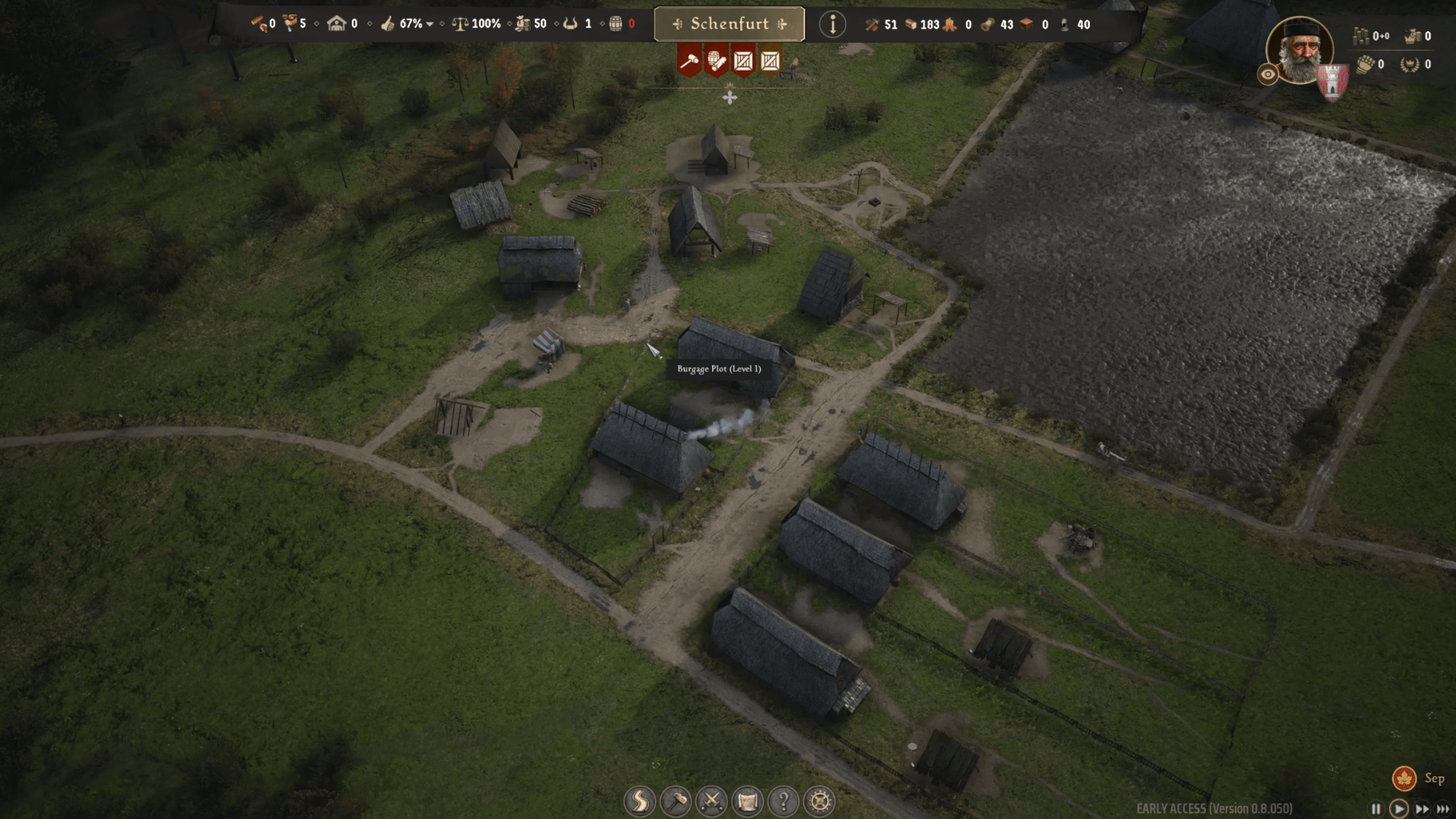
It feels like the marketing and branding were centered around the excitement Bannerlords created. It simply does not meet that level of gameplay and is more disheartening because it is still in “early access.” That is not to say the game is bad. I think fans of similar titles, like Anno, Age of Empires, or Farthest Frontier, will enjoy the refreshing atmosphere and game design.
Down to the details
The switch between the overview style of the map and the third-person combat is a distinct feature of Bannerlord that should not be glossed over. It creates a tactical burden when moving your army across the continent, while making the stakes high when the view switches because you are present on the battlefield with your troops. Also focussing skillpoints that can increase your personal speed and the speed of your formation. As you progress, you will also be able to send your most loyal followers on trade routes and skirmishes for you. With each victory comes the chance to further your reputation and gain influence among the other noble lords spread across the map.
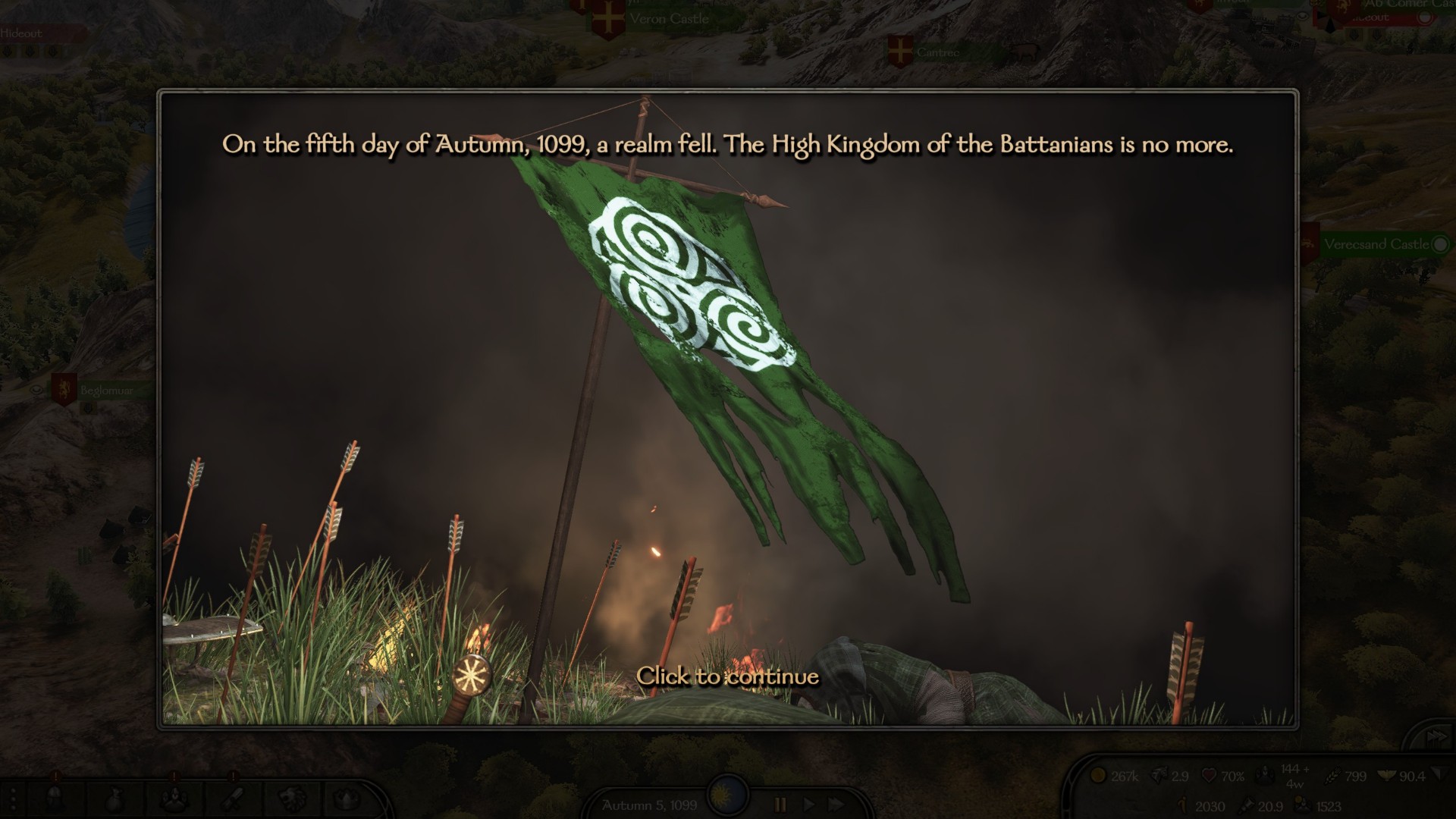
This dynamic influence is central for those seeking to conquer the globe under one banner, either their own or yours. Influence comes at a premium for the other notable mention, Bellwright. It has a more similar third-person style of play as well, and is the most similar game to Bannerlord I have come across. The major difference between the two is their subcategory. Bannerlord is mainly driven by strategy, while Bellwright is more centered around survival crafting in its single and co-op multiplayer environment.
You follow a storyline that puts players in the hot seat as a simple peasant accused of murdering nobility. The stakes could not be higher for your survival. You slowly grow your base by gathering resources and reputation from completing quests in neighboring towns and taking out bandits. The size of your base and your reputation allow you to recruit more pawns as well as those with higher skills needed for crafting higher-tier gear and consumables. This makes the villagers in your settlement have a much more integral feel as they progress with you in practicing their skills, and having them fall in battle can be a serious blow to your base.
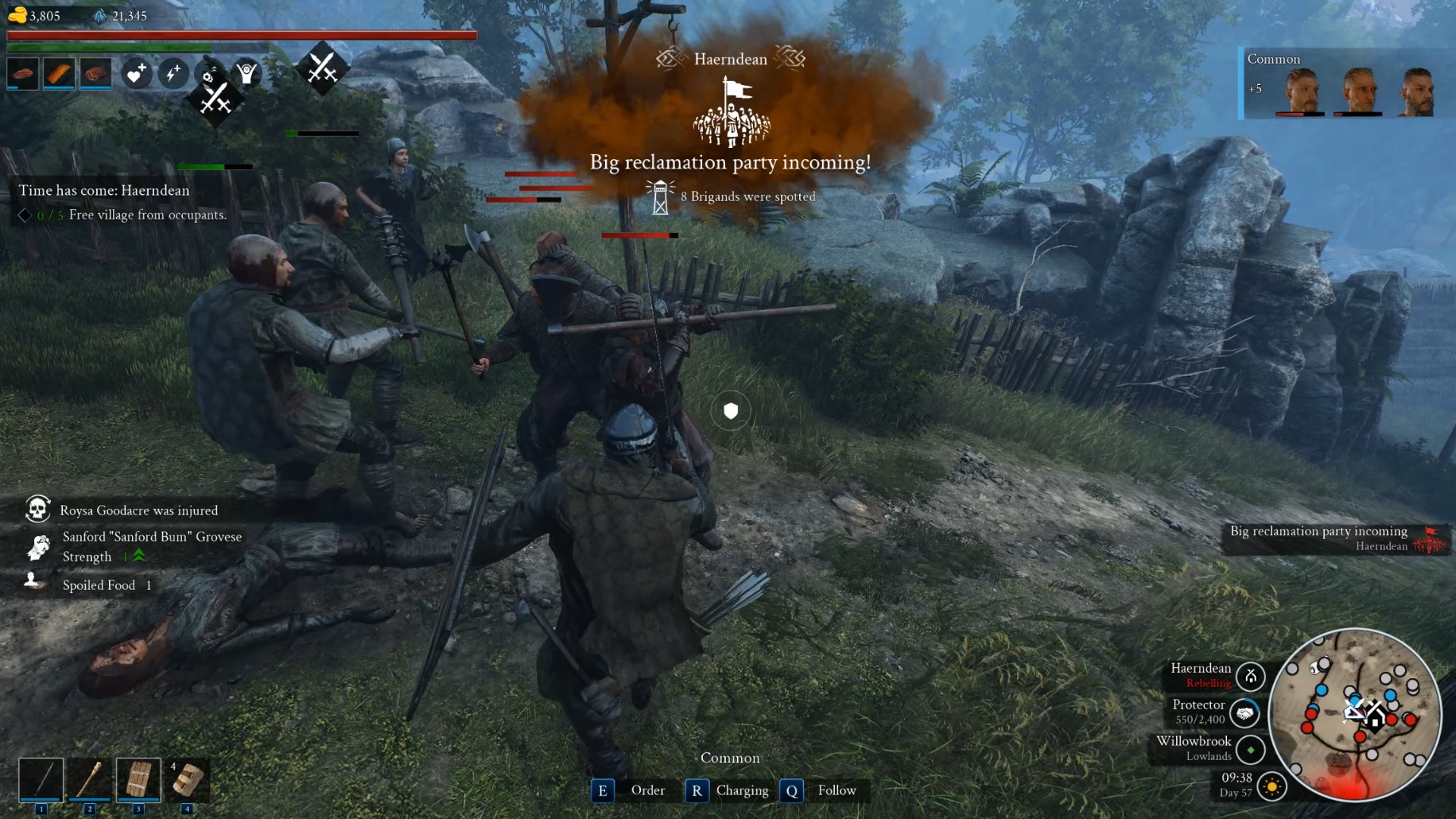
The same can be said for the companions of Bannerlord, should you choose to play with their possible death setting turned on. The difference in acquiring these followers between these two games is major. Bellwright requires your reputation to continually grow in order to acquire more and more useful pawns. This system can seem tedious and bottleneck you early on, as you will eventually be forced to take over settlements from hostile garisons. In Bannerlord, you will always have to fork over coin for any unit to follow you unless your reputation can convince a lord’s army to join yours for a brief time. The same goes for the total number of hero-type companions, but there are no restrictions outside of money that prevent you from bringing anyone to your party. That description bleeds into the scale difference between the games.
While the map is large for Bellwright, you spend the entirety of it in third person, walking in the open world. I do mean walking, as cavalry is not an option, at least at this time. The map for Bannerlord seems far larger because of the overworld. It may, in fact, be the same size when comparing only the third-person zones, but it lacks the tactical component that can so often turn a battle in comparison to Bannerlord. This is also outmatched in unit size between the two games. The functional size for Bellwright sits around 20 units; this number can be larger, but it is generally agreed upon. Bannerlord, however, allows for a single player to have 400 units by late game, and with the ability to combine other lords to follow your own squad, that number easily reaches the tens of thousands.
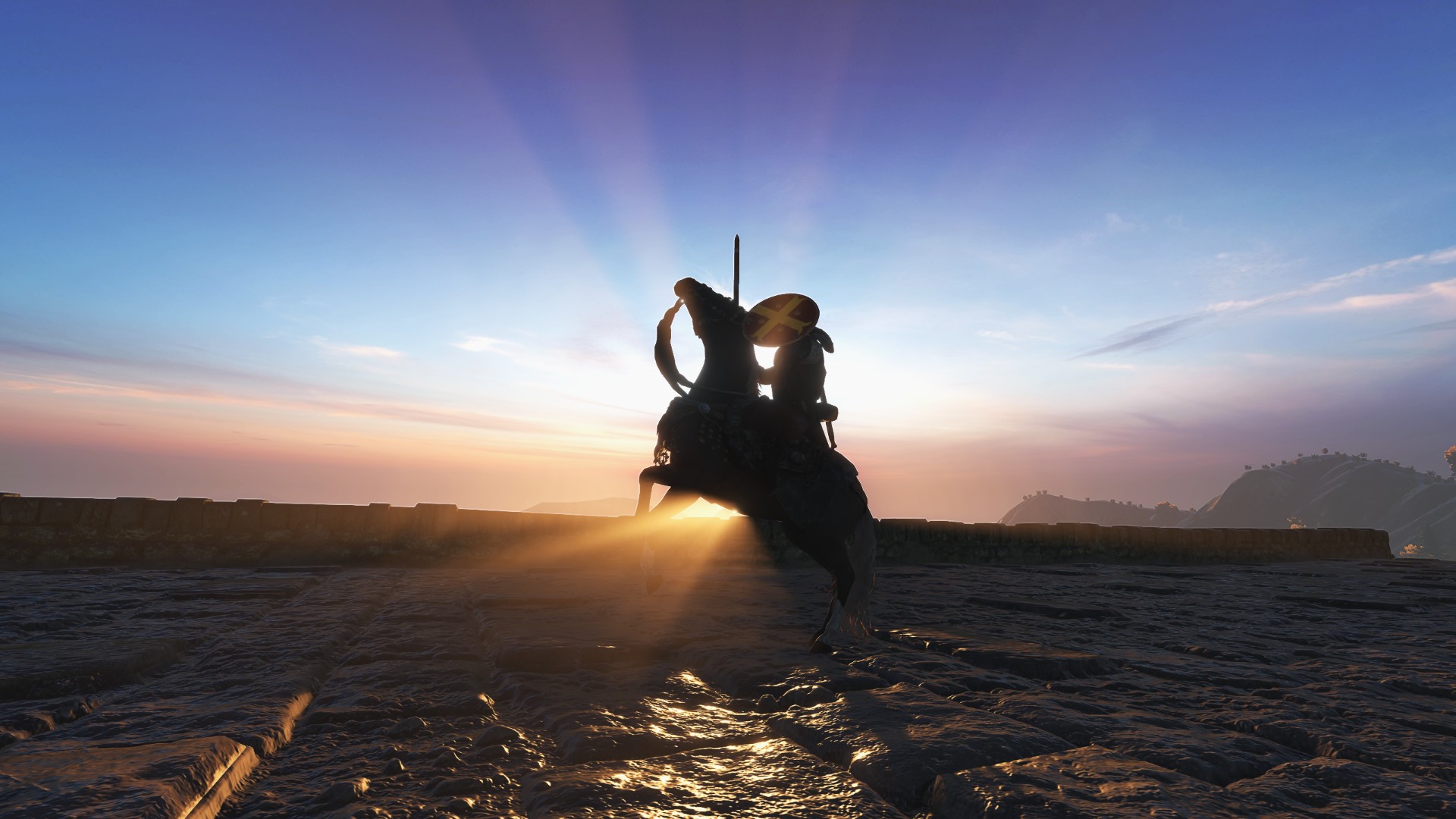
That does not make Bellwright a bad game, but rather something one would hope to know if they anticipated battles and tactics being more similar to Bannerlord. It mainly comes down to the subcategory mentioned earlier. Bannerlord has hardly any crafting in it. The blacksmith feature is unique and can earn players money and better equipment, but in Bellwright, it is the backbone of the game. For me, the crafting mechanic in survival crafting games always seems to be the limitation. Once you enter the final stage of crafting, there isn’t much more to do in those types of games. Bellwright uses the storyline and combat to extend that playtime, but for me, it lacks the total dynamic scale of Bannerlord when it feels like it wants to piggyback off of similarity.
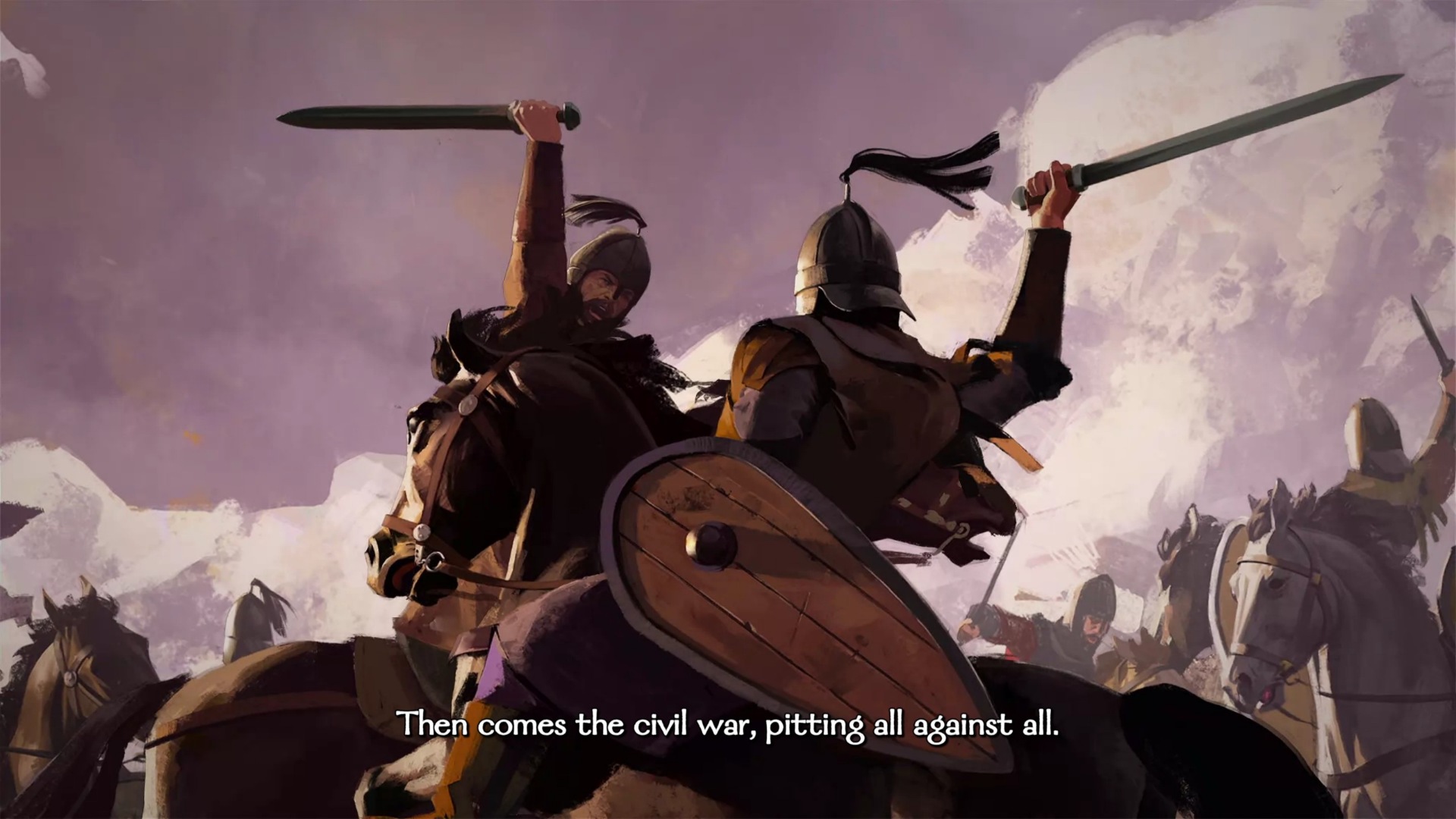
It is impossible to know when and where another army might gather or if a castle you hold will rebel in Bannerlord. You can estimate and assume, but the combat system always pushes your command, and that may be a disastrous path by the time you act. While the story is far simpler, it leaves all the options in your hands; Bellwright feels systematic as you follow the order of operations to craft the next level of gear and face the next level of enemy. It is also an early access title, and the use of AI for dialogue makes the rough edges feel more jagged, especially when Bannerlord has few voiced dialogue that does not detract from its narrative impact.
Parting words
It comes down to how exceptional Bannerlord, really all of the Mount & Blade titles, are as RPGs. There is no right path or way to play. You can have great success with an army of hundreds of peasant archers or fifty of the highest-trained cavalry. You can also ignore it entirely and create a massive trade network and use your influence and gold to buy castles. It also allows for use of lineage should you fall in battle or of old age, which is another feature few games offer and even fewer that execute well. Combine that with the multiplayer options it easily becomes a game to sink countless hours playing alone or with friends. Each of these three games is fun to play and certainly stands out as a unique title for its genre, but for RTS RPGs, there can be only one: Mount & Blade II: Bannerlord.
Still need more reasons to play Bannerlord? Check out my in-depth review and leave a suggestion for games that could be competitors we might have missed.

By Nash Moorer



 Off the Shelf Media
Leave a reply to The Head that Wears the Crown: Mount & Blade II: Bannerlord Review – Off the Shelf Media Cancel reply