
On April 14, 2001, Nintendo originally released Animal Crossing (AC) in Japan for the Nintendo 64, making this April the franchise’s 25th anniversary. However, it won’t officially hit this milestone in the United States until September 17, 2027.
Even still, this moment launched a global franchise that would spark five main iterations of the game, four spin-offs, an international aquarium tour, and generations of dedicated fans. To celebrate, Animal Crossing: New Horizons (ACNH) players can access a unique item for the occasion. Aside from a free update earlier this year, the celebration seems a little lackluster.
Compared to the massive campaign Pokémon received for its 30th anniversary, which included a Super Bowl ad, the re-releases of Pokémon FireRed Version and Pokémon LeafGreen Version, and the announcement of Pokémon Winds and Pokémon Waves, it seems like AC’s fans are getting left in the dust.
Granted, Pokémon is by far one of Nintendo’s most successful franchises, if not the most successful. This anniversary also falls on the heels of Pokémon’s big anniversary and at the same time as Pokémon Pokopia’s massive release as well as The Super Mario Galaxy Movie (2026) dominating the box office. Nintendo certainly has its handful, but the reality is AC simply doesn’t have the same star power anymore, and it’s Nintendo’s fault.
Where it began
According to the National Videogame Museum, creator Katsuya Eguchi, who was a designer at Nintendo at the time, was first inspired to make this game in 1986 as a result of feelings of loneliness and lack of connection when he moved away from his family to pursue his career. Along with co-creator Hisashi Nogami, Animal Crossing was born over a decade later.
The game was revolutionary at the time. In a promotional interview for Animal Crossing: New Leaf – Welcome amiibo, co-creator Hisashi Nogami said, “We didn’t have a proper genre that we could use as a reference point. It was very difficult to explain to the promotional staff on how to promote it. How do you write a catchphrase for this game? It’s unprecedented!”
The premise was simple: make friends and build community.
In the original version, the gameplay didn’t extend far beyond that. You arrive as a human in a town full of animals. You’ve moved away from home and need to pay off your new place to Tom Nook. Build friendships, explore the village, and contribute to the cozy place you now call home. For the most part, the games haven’t strayed far from this concept, for good reason. Though newer versions have allowed for new ways to decorate or build the village, engage with other players online, and explore additional towns, cities, or islands, the core gameplay has essentially remained.
What made AC so unique in the early 2000s was its incorporation of the passing of real time into the game. Experience warm summer mornings and brisk autumn nights. See the leaves change and celebrate holidays in real-time with the beloved villagers. This system has since been adopted by other similar games, but AC was a pioneer for this evolution in gameplay. Prior to AC as well, the idea of a “cozy” simulator game, where your only objective is to truly enjoy the game, was nearly unheard of.
It became a trailblazer for a genre of cozy simulator games that have avid fans and have sparked numerous new titles, which we are seeing more and more of every year. Over those years, some of AC’s fans may have been poached by other titles that were adding more unique features and innovating the gameplay in ways that the present AC titles were not.
That is, until March 20, 2020.
A light at the end of a long, dark tunnel
Animal Crossing: New Horizons was released perhaps when society needed it the most: at the onset of a global pandemic.
In my prior article critiquing the announcement of the Nintendo Switch 2, I briefly discussed the difficulties and battles associated with securing a Nintendo Switch at this time. Initially, I had zero interest in receiving a Switch. I was a broke, busy college student. In simple terms, I didn’t have the time or the funds to make owning a console like the Switch a smart decision.
Then, the whole world shut down, and a game I had loved since my childhood was being hailed as a light in the darkness. A 2020 article from The Next Web quotes veteran developer Sam Sharma as saying, “there’s definitely the comfort of doing daily tasks that we’ve been missing in self-isolation, that makes it a relaxing escape.”
It was a cultural moment to be sure. The game sold over 13 million copies in its first six weeks, according to CNBC. It appeared the AC was going through a renaissance. New and old fans alike were flocking to the game and finding ways to interact with one another in one of the few ways they could.
But unfortunately, it seems to have been fairly short-lived.
Losing steam
To date, I have nearly 300 hours logged into ACNH for my Switch. Not to mention the many other hours I’ve logged throughout the years on Animal Crossing, Animal Crossing: Wild World, and Animal Crossing: City Folk. I’ve even dabbled in some of the mobile games like Animal Crossing: Pocket Camp. Suffice to say, I’ve been a dedicated fan for a long time.
Truthfully, though, it’s been years since I’ve booted up the game, even with the DLCs and recent free update. There’s a part of me that would love to open the game back up and have fun playing, but there are more parts of me that are being drawn to newer, more competitive titles.
Put simply, ACNH grew to be boring, and no matter how much nostalgia or deep love I have for the franchise, it doesn’t make that statement any less true.
The primary issue with Animal Crossing as a franchise is the same reason for most of its success. It’s an open-ended game where the objective is essentially to do nothing but exist. And there’s a threshold for how much entertainment can be gained from a game like that long-term.
It wasn’t until I began playing competitor titles such as Disney Dreamlight Valley that I realized how little the AC franchise as a whole was making attempts to innovate.
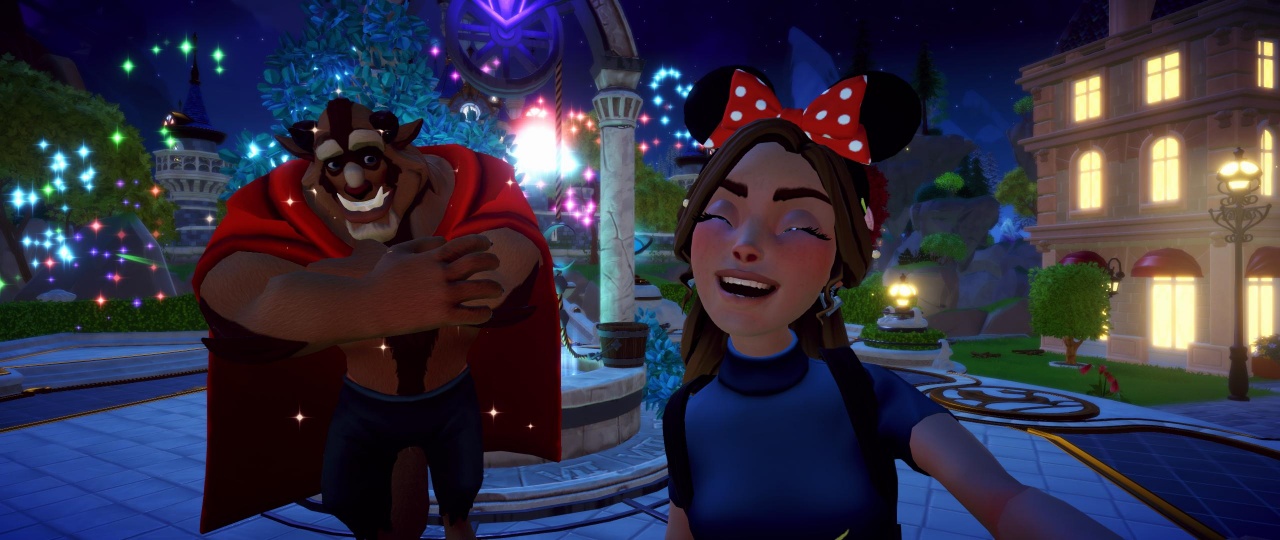
In Disney Dreamlight Valley, for instance, the game still employs the passing of real-time in-game, leveraging holidays and special-time events to keep players engaged, but they allow some of the realism to drop. One example of this is that time of day does not impact the characters who are available or the stores that are open. As an adult, often playing games at odd hours, it’s the perfect marriage. I can still engage with all of the characters and all of the shops without losing out on my lunch break to do so. Currently, Disney Dreamlight Valley also experiences frequent updates and launches of new DLC that add entire new maps and characters to engage with.
Another critique I have of the games as I’ve gotten older is that there simply isn’t enough story to play long-term. It sounds nitpicky for a game where the goal is to essentially do nothing, but there is still a loose plot there, which is simply too weak and too short to compete with other games in the now-evolved genre.
Though I do not have a Nintendo Switch 2 and thus have not played Pokémon Pokopia yet, everything I’ve seen or read about the title points to major improvements on AC’s building blocks. However, the game is still incredibly new, and it’s yet to be seen whether its longevity will last with fans.
As of this moment, those are the two most obvious direct competitors. And they both seem to be blowing ACNH out of the water.
Parting thoughts
In a landscape where videogame developers are constantly trying new strategies to secure our decreasing attention, disposable income, and time, Nintendo seems to have lost the race when it comes to its Animal Crossing franchise.
While it certainly does not spell “the end” for this franchise, and we’ll have to wait and see what Nintendo has in store for the long-term, Nintendo’s lack of competitive advantage for this title is growing greater with every new iteration. As a fan, I can only hope they adopt some of the lessons others have already learned. Or perhaps, they are simply afraid of breaking too far from the mold.
In any case, I’m thankful for 25 years of Animal Crossing. It is a game I credit for building my love of videogames as a whole, and it’s the title that brought me back to the hobby after years away.
AC will have its moment in the sun again. Until then, cheers to 25 years.





 Off the Shelf Media
Leave a comment