
Genre: Action, Adventure
Developer: Machine Games
Publisher: Bethesda Softworks
Release Date: December 8, 2024
Players: Single-Player
Review Date: March 16, 2026
Format: PC, PS5, Xbox X/S, Switch 2
Playtime: 8 hours
MSRP: $69.99

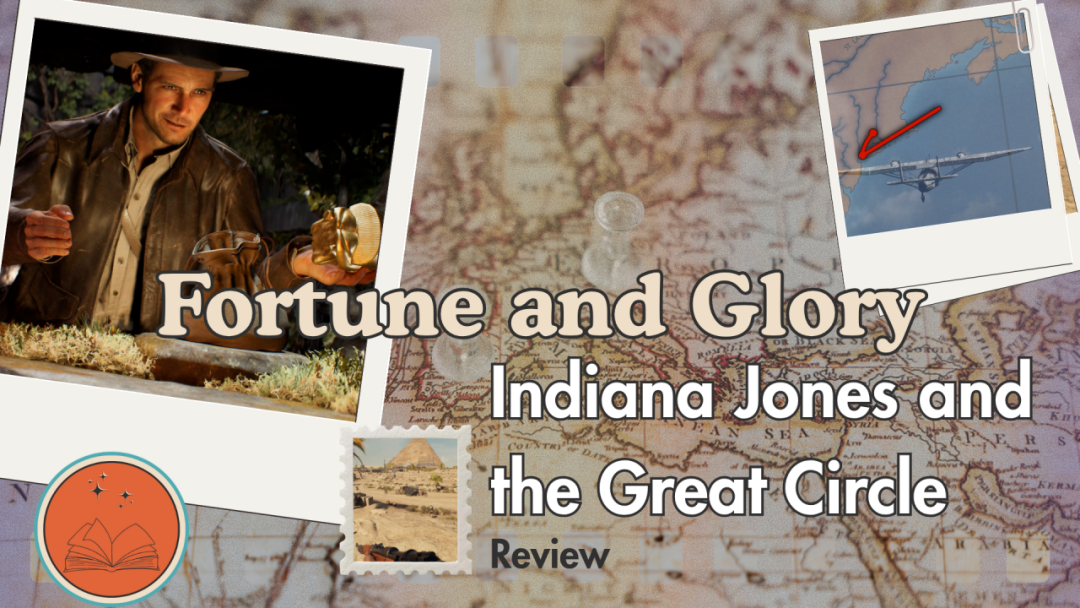
I was not sure what to expect when this title was first introduced. As they often do, the trailer looked incredible by paying homage to the original films while combining them with a unique storyline. It was the next title to be released by Bethesda after Starfield, which felt somewhat disappointing. Albeit showed the studio remains a major player for good reason, it left the unsatisfying taste of a game that succumbed to a rushed release date. Still, it is important to note that Machine Games, a sister company under the Zenimax umbrella and famous for the Wolfenstein series, developed this archaeologist-themed puzzle solver.
Gameplay: 2
The biggest difference for Indiana Jones and the Great Circle comes from perspective. Outside of climbing, the entire game uses a first-person perspective. It might not sound like an important difference, but it does make the actions you take feel more personal. Combined with a quickly depleted health and stamina bar, each action comes with a realistic weight, at least in the first chapter of the game. The same can be said for weapons.

They break quickly, and you cannot carry multiple, but fret not, because they are scattered in abundance as common items, from dust pans to pickaxes. These items cannot be carried continuously except for one special item that accompanies each unique outfit. However, ammo might be harder to find. While your satchel can be expanded, it also has a diminished weight. It is less convenient to access items from the hotbar, but it seems intentional. Almost as if Machine Games wanted rummaging through a packed satchel to be awkward during a fistfight while remaining easy to navigate.
The combat feels rewarding and as risky as putting your dukes up in real life. Combined with the different enemy types and their weapons, it favours stealth over head-on combat with every enemy you come across. The methodical approach not only feels in line with the movies, where combat occurs after all options have been exhausted, but also doubles to encourage exploration. There is a lot of stuff to pick up in this game. Almost all of it gives you experience for levelling up, and if the item is not tied to a quest, it at least gives exposition to the history you are surrounded by or more current events relevant to the game. It only took a few decades for a game to have worthwhile collectables without them feeling tedious.

The little handholding that does occur makes the puzzles feel rewarding as well. It is nothing too complex to solve, so I encourage staying offline for answers. My only advice is to take a step back if you are stuck, as you very well could have revealed something directly behind you. Combined with the minimal carrying capacity, first-person perspective, and a practical map and journal design, it feels like being in the driver’s seat of an Indy movie.

Story: 2
No swinging with monkeys or time travel. Without divulging too much, the story is wrapped around a plot much more reminiscent of Raiders of the Lost Ark. The characters are unique, without the vast majority of them feeling too gimmicky.
Considering the length of the game compared to a movie, there are far more people players can expect to come across, and each talks and behaves with their own personality. As mentioned before, the collectable notes add a lot to the game, having a real explorer’s feel to them, especially when you find a missing piece of history unprompted. While there certainly is more to say, it should really be left for players to discover.
Atmosphere: 2
Typically, games aiming for a heavily cinematic experience sacrifice fluid game design. Last year, I reviewed Ghost of Tsushima and found myself amazed at how perfectly fluid the design merged aesthetics and practicality. I was surprised that not many other titles managed to come close in design. Typically, one expects a game with nothing more than a movie’s theme or something much more removed from a game, such as Fahrenheit: Indigo Prophecy. While an excellent title, it should certainly be prefaced to new players that you had better enjoy QuickTime events before picking it up.
The Great Circle dips into both pools. It certainly feels more like a game with the first-person design, but the fluid interactions have just enough separation for them to be more involved than quick-time events. In short, it adds mass to every action. Climbing feels heavy, weapons carry their weight with each swing. Having to equip a key for each locked door seems small but rather gently builds the acceptance for realism. It grounds itself in a dense layer of believability; certainly, there are elements that go beyond what a person can do, but that is why you play as Indiana Jones and not your local librarian. Which, in turn, makes you want to think before jumping into a situation, especially when considering that there is no manual save option. The decision you make will ultimately be quick-saved with or without your input.

There I go talking about gameplay in the atmosphere section of the article. That is the point. The developers did such a good job of blending them together it is the extra step that divides it from other puzzle-solving exploration titles. It is what you expect from a AAA title. It looks fantastic, embraces that familiar score while also building on the familiar elements to make a long stay in that universe feel natural. That is, after rolling out the cash.
Value: 1

$70 is a tall asking price, especially without DLC incorporated. While it has become the standard for major developers, it should come with easy justification. You are paying for intellectual property, mainly the Indiana Jones theme. I cannot give it a zero on our meter because it is an excellent game. That being said, it would not perform well without the added context of the cinematic universe, especially at that price point. It sits at a crossroad; Indiana Jones fans will love it, puzzle game players will like it. Not that the puzzles are bad, but games that delve more into puzzle-solving can often be found at a much lower price tag. It is impressive how well it wraps a game into a movie series, and if you removed that, it would lose much of its soul. It is the combination of the two that works so well, meaning it does require graphics impressive enough to immerse the player and the pricetag of a major studio to deliver.
Duration: 1

Players can expect to spend about 16 hours to complete the base game. There really is no incentive to replay it, which is understandable but disappointing. It is probably the biggest critique of the game’s value. It delivers in all other areas, but for the asking price of $70, it falls well below our expected $1 per hour of playtime. When you consider that platinum completions land at around 40 hours of gameplay, that would probably be more in line with a reasonable price.
Total Score: 8/10
It is a great game. Gameplay and atmosphere blend perfectly to make players feel like they are controlling Dr. Jones on another grand adventure, all in the name of archaeology. The story also delivers a captivating narrative fit for a film. The game is nothing short of organic and easy to pick up, while making getting stumped on a puzzle all the more rewarding to solve. If it were not for the dramatic price tag, this would easily be a perfect game. It ends up being hard to ask so much for simply not an equal return in playtime.

By Nash Moorer
Leave a Reply