
Genre: Role-playing Game (RPG)
Developer: Ubisoft
Publisher: Ubisoft
Release Date: October 5, 2018
Players: Single-Player
Review Date: August 12, 2026
Playtime (To Date): 157 hours
MSRP (To Date): $59.99
Ubisoft has recently been in a bit of a rough spot. That does not mean all of their games are bad, but the process of buying any of their new titles is a cautionary tale. It is something we have talked about before as the major developer draws closer to total homogenization with each game they release while forgetting the great things their previous titles had that separated them in a good way.
Whether they have started to come around, internal pressure, or sourcing the wrong critiques, as their current status is anyone’s guess. What we do know is that not every game falls below the bar; some are even incredible but might have been missed by players as a byproduct of their massive release schedule. One such title is Assassin’s Creed Odyssey.
Gameplay: 1
Odyssey came at a crossroads for the franchise in terms of gameplay. Assassin’s Creed Origins, the title before Odyssey, revamped the combat system to make it more similar to a button-mashing style. It was a slow evolution that had been creeping into the franchise for a while, but with the button remapping and higher enemy health, it became unavoidable in the Ancient Egypt saga for the franchise. It did not see a complete removal of stealth, but one that was more heavy-handed in its combat use. Odyssey continued that similar style, which feels more refined and incredibly similar to its predecessor. It marks a clear distinction for the franchise, as the next generation of games would maintain the same style and layout for controlling your character.

Players can expect similarities such as synchronizing viewpoints for fast travel points (Haybails optional), utilizing an eagle for enemy and item tagging, which is awesome, as well as a consistent level creep for weapons and armor. The major distinction is the overall map size. This game is massive. As you travel across Ancient Greece, don’t think you’ll only be able to go on foot or hoof. The boat mechanics introduced in Assassin’s Creed IV: Black Flag are largely intact in this game and much needed, as you will need to cross the ocean for story and side objectives. It may not have the depth of Black Flag, but it is reassuring to see good mechanics being reintroduced properly and as a major portion of the gameplay.
It refines the new mechanics introduced from Origins, pulls the naval combat from Blag Flag in a simplified package, and ramps up the open combat for battle scenarios. It is easy to see it diverge from the ‘stick to the shadows’ philosophy, but the option still exists. It is a good combination of mechanics that have worked well on a map that does not have you finding fast travel points every 50 feet. The scale is large but open enough to feel like an interesting world that repays exploration without making it feel annoying. That being said, there are a lot of Points of Interest (POIs) to discover. Not all are important, but enough to make it worth the extra 100 meters to discover them. They also deserve a shout-out for offering the ability to make quest markers revealed immediately or discoverable when the game starts. Usually, I would be inclined to say this is a wishy-washy feature Ubisoft implemented because they do not know what their fans want, but that’s not the case. The two biggest issues with gameplay come from the style of the game.

The first minor issue is the button mapping. Which, yes, can be changed in the menu, but the default settings are what the creators feel is best. While the “Soulsborne” games are popular, the control configuration does not transfer well to a game that should have stealth as a major focus. It is almost an open admission that stealth is sidecarred and is most evident when trying to initiate dialogue. ‘Stealth assassination’ and ‘talk’ are defaulted to the same button. This really becomes a problem when players have to talk to a Spartan or Athenian Lieutenant inside their camp as soldiers walk by them nonstop. That’s the only warning you get because the game sure does not tell you.
The other issue is how spongy the enemies are. On its own, it’s not too much of an issue, but because of how long the game is and how combat-forward the game loop is, it feels repetitive quickly. Once you find your groove, you will probably stick with the same attacks, the ‘Spartan kick’ and ‘disarm shield’ being so useful I would be willing to wager the majority of players have them on their move wheel from start to finish.
Story: 2

The story is important and has been a major problem with Ubisoft in their recent titles. While this game does increase the need for open combat, it does not tone down telling a good story. To save those who have not played from any spoilers, I will stick to the obvious: You play as, essentially, a demigod trying to uncover the plot against you and your family.
Players have the option to select between playing as a female or male character, with zero impact on abilities and story outside of minor dialogue. There are few side quests that feel memorable, but they are largely quick missions to either dispatch an enemy commander, hunt down some animals, or find loot nearby. Largely forgettable, but enough to make them worth doing while also introducing famous historical personalities, similar to how Assassin’s Creed Brotherhood started making them more personal in-game.
Atmosphere: 2
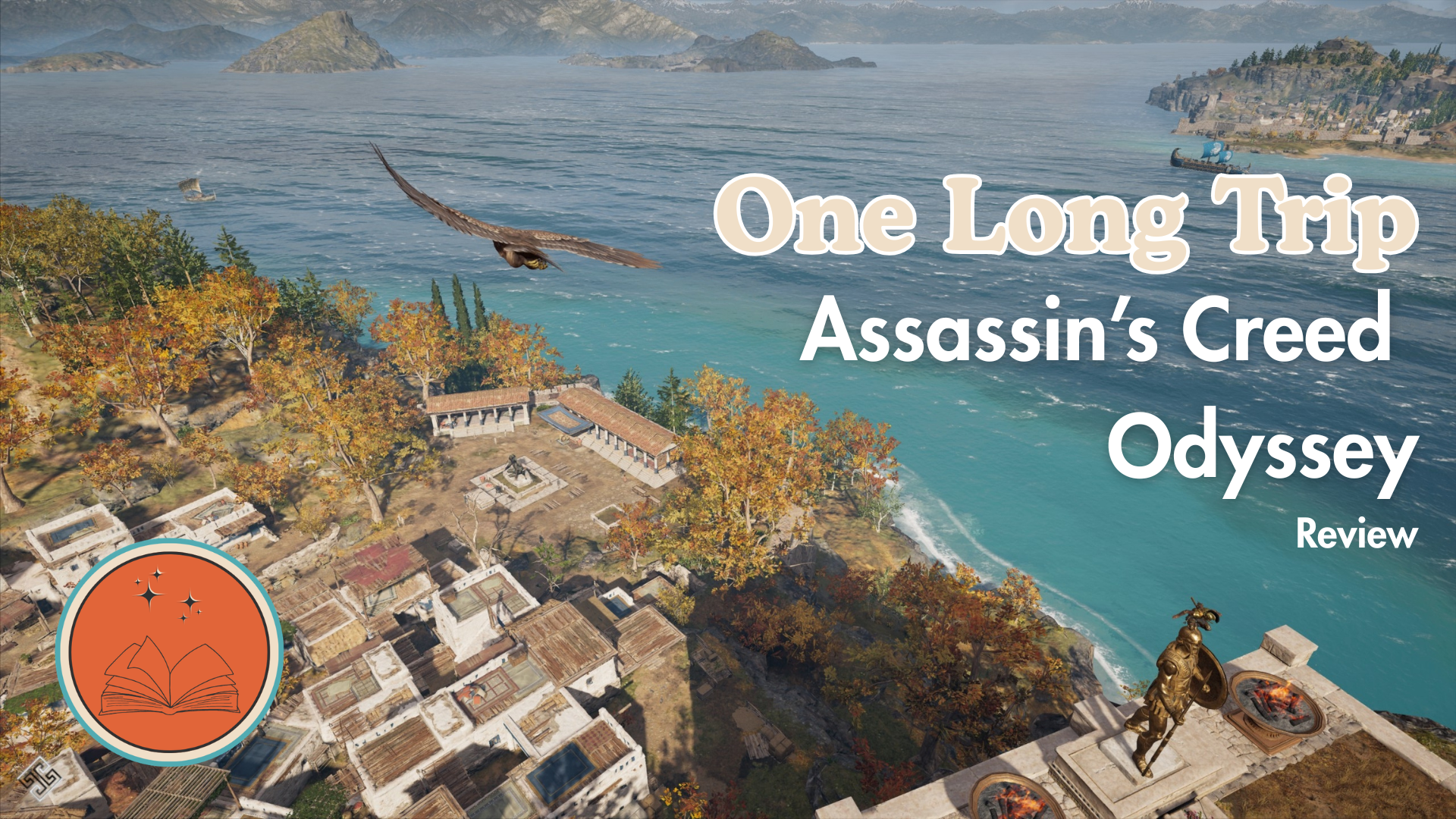
Ancient Greece is gorgeous to explore. The visuals in the game are perfect and blend reality with fantasy elements seamlessly. Nothing feels out of place, and it is a massive boost for discovery just to see the different landscapes and structures. Combined with the vast seafaring and bird’s-eye view from Ikaros, the game does nothing short of pleasing the eyes. The music, composed by The Flight delivers an equal amount of balance between discovery and combat. It is obvious the development team(s) took their time to build the perfect world for the game.

Value: 2
The game is normally listed at $59.99. That might seem steep, but because it was released in 2018, it can often be found on sale far below that, hovering at $12.99, and this year alone it was listed for $5.99 in January. Typically, the discount price does not play an important role, but the frequency of sales is close to half of the regular price, and then there is the amount of playtime you get.

Duration: 2
Players can expect more than a full game. It’s easy to sink in 60 hours of gameplay on a single run, and completionists might have their work cut out for them if they want to hit platinum status. The downloadable content (DLC) is also fun, and while the sale number for it is dramatically less, the price tags are also much lower. Even with them at full price, players will easily get their money back in playtime.

Total Score: 9/10
The game is worth a review because of the Ubisoft oversaturation effect. The franchise as a whole is a massive one, with so many titles it can be hard to know which is worth its price tag. Odyssey hits the mark perfectly. I would be willing to say it’s a must-have if you enjoy the franchise.

You can expect a different type of game from the titles before Origins, but you will still have a great time; it is probably the best game released in generation two of the franchise. It has had enough time to receive any patches needed. The first time I played, I did experience a glitch that locked level progression, but it was fixed before during the same playthrough. Ubisoft has had some iffy titles, but Assassin’s Creed Odyssey is far from it.

By Nash Moorer

Leave a Reply